Understanding Risk Management in Agriculture
Understanding Risk Management in Agriculture
Farming is a business built on uncertainty. From unpredictable weather to fluctuating commodity prices, agricultural operations face a wide range of risks that can impact profitability and long-term success. This is where risk management comes in—a proactive approach to identifying potential threats and developing strategies to minimize their impact.
What is Risk Management?
At its core, risk management is the process of recognizing potential challenges and creating plans to reduce their effect on your operation. In agriculture, these challenges can include volatile market prices, adverse weather conditions, changing government regulations, and even personal or financial setbacks.
Risk management is not a one-size-fits-all solution. Every farm is unique, and so is its approach to managing risk. The goal isn’t necessarily to maximize profits every year, but to create stability and safeguard the operation against unexpected disruptions. A strong risk management plan provides peace of mind and ensures your farm can withstand tough times without compromising its future.
Why Risk Management Matters
Even if your farm is thriving today, risks can emerge quickly and without warning. A sudden drought, a market downturn, or a change in tax laws can derail progress. Having a plan in place helps ensure your business can continue operating effectively during these challenges. A good risk management strategy acts as a buffer against financial losses, production setbacks, and other obstacles that could otherwise threaten your livelihood.
Types of Agricultural Risk
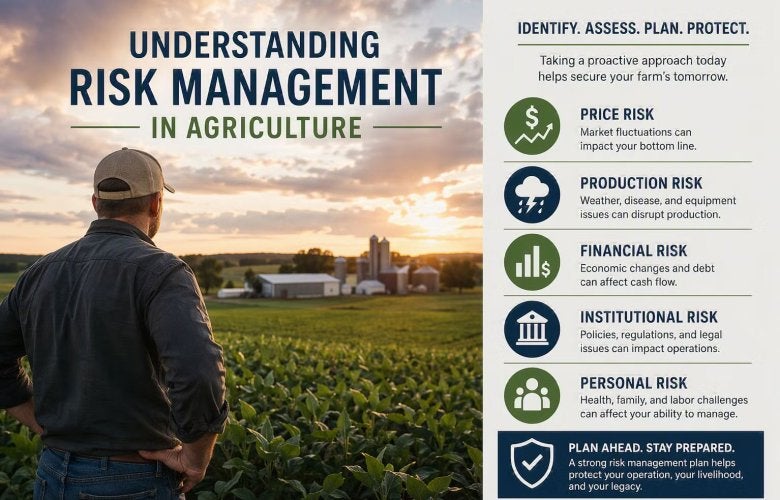
Understanding the different types of risk is the first step in building a comprehensive plan. Common categories include:
- Price Risk: Market fluctuations can dramatically affect commodity values and input costs.
- Production Risk: Weather events, disease outbreaks, and equipment failures can disrupt production.
- Financial Risk: Economic conditions, rising interest rates, and high debt levels can strain cash flow.
- Institutional Risk: Government regulations, tax laws, and legal issues can impact operations.
- Personal Risk: Health problems, labor shortages, and major life events (such as death or divorce) can affect management and continuity.
Assessing Risk Impact and Probability
Once risks are identified, it’s important to evaluate their potential impact and likelihood. Risks can range from low impact, such as short-term disruptions, to high impact, which could threaten the long-term viability of the farm. Similarly, risks can be rated by probability—low, medium, or high—based on historical data and the specific characteristics of your operation. This assessment helps prioritize which risks require immediate attention.
Tools for Managing Risk
Fortunately, there are many tools available to help farmers mitigate risk:
- Forward Contracting: Lock in commodity prices ahead of time to reduce market uncertainty.
- Hedging: Use futures and options markets to stabilize prices.
- Insurance: Coverage for crops, liability, property, life, and disability to protect against financial loss.
- Enterprise Diversification: Expand income sources to reduce dependence on a single commodity.
- Liquidity Management: Maintain cash reserves and short-term assets to handle emergencies.
- Best Practices: Implement sound production strategies, such as maintaining feed inventories or having backup equipment parts.
- Legal Planning: Establish formal agreements, succession plans, and estate planning to ensure continuity.
Understanding Your Risk Tolerance
Every farm has a different capacity to absorb risk. A strong financial position allows for greater flexibility, while a more vulnerable operation may need to take a conservative approach. Knowing your tolerance helps guide decisions about which risks to accept and which to mitigate.
Creating a Risk Management and Contingency Plan
A good plan doesn’t have to be complex. It might be as simple as stockpiling feed or increasing insurance coverage. The key is to think proactively and prepare for “what if” scenarios. Contingency planning helps you respond effectively when unexpected events occur, reducing stress and improving outcomes.
Risk management is not about eliminating uncertainty—it’s about preparing for it. By understanding the risks your operation faces, evaluating their potential impact, and implementing practical strategies to reduce exposure, you can build a stronger and more resilient farm business. Whether through insurance, diversification, marketing tools, or contingency planning, a proactive approach to risk management helps protect both your operation and your family’s future. In an industry where change is inevitable, the best defense is a thoughtful plan that allows you to adapt, recover, and continue moving forward with confidence.
See All News & Information