Mortgage Terms Every First- Time Rural Homebuyer Should Know
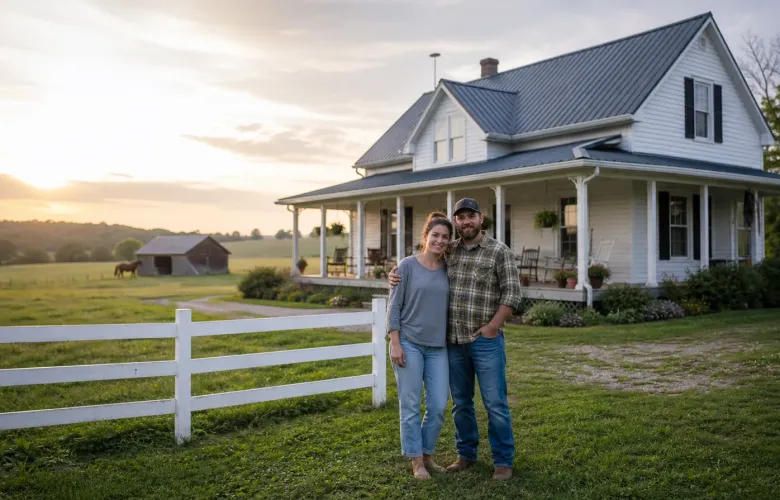
Buying your first place in the country is a big step. You might be picturing a front porch, space for a garden, or a few acres outside town—but feel unsure what lenders mean when they start talking about pre-approvals, or equity. That uncertainty can make the whole process feel more stressful than it needs to be.
At Central Kentucky Ag Credit, we sit across the table from first-time rural homebuyers every week. Once the language becomes clear, members are often surprised by how much more confident they feel. This guide walks through the key terms you are most likely to hear, using simple examples grounded in real country-home situations.
What Common Mortgage Terms Really Mean
When you hear lenders talk about mortgage terms, they’re simply naming the parts of your home loan—things like your interest rate, principal, and loan term. Understanding these basics helps you compare options, ask better questions, and choose a payment that fits your rural budget.
At its core, a mortgage is a long-term loan used to buy a home and the land under it. Your monthly payment usually covers several pieces at once: the money you borrowed (called principal), and the cost of borrowing (interest). Resources from lenders like Freddie Mac’s My Home break these building blocks into the same simple categories.
For a country home, those same terms still apply—you may just have more land, outbuildings, or a well and septic system in the mix. The goal is not for you to sound like a banker. It is for you to understand what each part means for your monthly payment and long-term plans.
Pre-Approval: Your Financial Green Light to Start Shopping
A pre-approval is a lender’s early review of your finances to estimate how much you may be able to borrow. You share information such as income, existing debts, and savings, tax returns, and an updated balance sheet, and the lender uses that picture to issue a written estimate of a comfortable price range.
For a first-time rural buyer, pre-approval does three important things. It shows sellers you are serious, so your offer on that small farmstead near town carries more weight. It helps you avoid falling in love with a property that would strain your budget. And it makes conversations with your loan officer more concrete, because you are working with real numbers instead of guesses.
Think of pre-approval as your financial "green light" before you start driving all over the countryside to look at listings. For example, if your household brings in steady income and you have manageable other obligations, a pre-approval might confirm that a modest home on several acres is well within reach. Housing resources from HUD also encourage buyers to pair that price range with an honest look at how the payment fits alongside the rest of your monthly expenses.
Down Payment, Principal, and Interest
Your down payment is the portion of the home’s purchase price you pay upfront. The principal is the amount you borrow after that down payment, and interest is what the lender charges you to use that money over time.
The size of your down payment can affect both your monthly payment and your loan options. A larger down payment usually means a smaller loan balance and potentially more flexibility in how the loan is structured. At the same time, many first-time buyers do not bring a large lump sum, and that is okay. The right down payment is the one that fits your savings, keeps some cushion for emergencies, and still lets you buy a home that supports your long-term plans.
Interest rate is the other major driver of cost. Over the life of a 30-year loan, even a small difference in rate can add up to thousands of dollars in interest. That is why it is worth asking your loan officer to show you side-by-side estimates for different rate and down payment combinations in real dollar terms, not just percentages.
Closing Costs
Closing costs are the fees associated with finalizing your home purchase. They can include appraisal fees, title work, recording fees at the courthouse, and loan processing or underwriting fees. These costs are separate from your down payment and are typically due at closing, though in some cases they may be negotiated as part of the purchase agreement.
When you receive an official loan estimate, you will see your projected escrow amounts and closing costs listed clearly. Do not hesitate to ask your loan officer to walk line by line through that document—it is your roadmap to understanding exactly where every dollar is going.
Loan Term Choices for Your First Rural Home
Your loan term is the length of time you have to repay your mortgage. Common terms are 15, 20, or 30 years. The term you choose will affect your monthly payment and how much interest you pay over the life of the loan.
In general, a longer term such as 30 years means a lower monthly payment but more total interest over time. A shorter term, like 15 or 20 years, raises the monthly payment but can significantly reduce the interest you pay. Guidance from Freddie Mac’s My Home outlines these same tradeoffs—shorter terms usually come with slightly lower interest rates, while longer terms prioritize month-to-month affordability.
For a first-time rural homebuyer, the right term is often the one that leaves room for real life: feed bills, fuel, equipment repairs, and the occasional unexpected vet or mechanic visit. One helpful exercise is to look at your budget with your loan officer and test how a 20-year and a 30-year payment feel alongside your other obligations. Sometimes the peace of mind of a slightly lower payment is worth taking a little longer to pay off the loan.
Building Equity with a Fixed-Rate Mortgage Over Time
Equity is the portion of your home that you truly own. It grows in two main ways: as you pay down your principal and as your home’s market value increases over time. A fixed-rate mortgage—where your interest rate stays the same for the life of the loan—can make that equity growth easier to plan around.
With a fixed-rate mortgage, your principal-and-interest payment does not change, even if interest rates in the broader market move up or down. Many first-time buyers like that predictability because it makes long-term budgeting simpler. A glossary from Freddie Mac notes that fixed-rate mortgages is the most common type of home loan for this very reason.
Consider a straightforward example. You buy a modest home on a few acres outside a Central Kentucky town, choosing a fixed-rate mortgage with a payment that fits your comfort zone. Each month, a portion of that payment reduces your principal, slowly increasing your equity. If, over the years, your property value also rises, that equity can become a tool—supporting future improvements, refinancing options, or simply strengthening your overall financial footing.
Buying your first rural home should feel exciting, not overwhelming. When you understand the language—pre-approval, down payment, principal, interest, escrow, closing costs, loan term, equity, and fixed-rate mortgage—you can sit down with a Central Kentucky Ag Credit loan officer as a confident partner in the process. Together, you can match the right mortgage structure to the way you hope to live on the land, today and for years to come.