Episode 46: Investing in the Next Generation
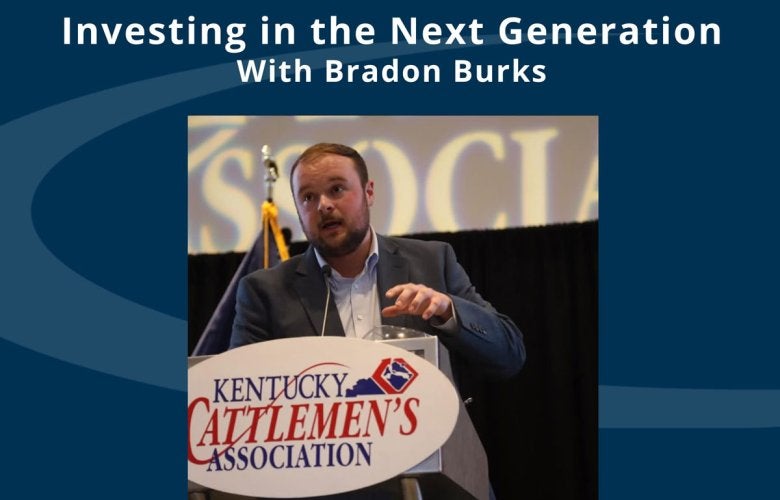
In this episode of Beyond Agriculture, we sit down with Bradon Burks, Director of Education for the Kentucky Cattlemen’s Association, to explore how the next generation is shaping the future of the beef industry. Bradon shares an inside look at the Kentucky Junior Cattlemen’s Association and the wide range of events they host—from leadership development and competitions to hands-on learning experiences that build confidence and skills in young producers.
We dive into why youth involvement is so critical, not just for those growing up in agriculture, but for any young person looking to develop leadership, teamwork, and a deeper understanding of the industry that feeds our communities. Bradon also highlights the impact these programs have on participants and why creating opportunities for all youth to get involved has never been more important.
Whether you're a producer, parent, educator, or simply passionate about agriculture, this conversation offers valuable insight into how investing in young leaders today is strengthening the future of agriculture.
Learn more about KJCA at www.kycattle.org
- View Transcript
Intro (00:01)
Welcome to Beyond Agriculture, the podcast that takes you beyond the scope of ag and into the real-life stories, conversations, and events taking place in our community. Who we are and what we do is beyond agriculture.
Cassie Johnson (00:24)
Welcome back to Beyond Agriculture, the podcast where we explore the people, programs, and passion shaping the future of agriculture. Both inside and outside the industry. I'm your host, Cassie Johnson, and today's episode is all about investing in the next generation. I'm joined today by Bradon Burks, who serves as the advisor for the Kentucky Junior Cattlemen's Association. Bradon works closely with young people across the state, helping them build leadership skills, industry knowledge, and real-world experience through a wide range of programs and events. Bradon, welcome to the show.
Bradon Burks (00:59)
Thanks for being here, appreciate it.
Cassie Johnson (01:01)
So Bradon, I know that as far as, you know, advisor, that's not just all that you do at the Cattlemen's. Can you tell us a little bit more about your job and what all takes place?
Bradon Burks (01:10)
Sure. So my role within the Kentucky Cattlemen's Association, I do serve as our Junior Cattlemen's Advisor, but I'm also our Director of Education. And so with that title, it entails, you know, doing education programs for producers but also on the consumer side using Beef Checkoff funds to make sure that producers' voices are heard. And we're working to increase beef demand. If that's doing teacher professional developments, going on the road and doing events with those educators or whatever that might be, you know, we're working to make sure that all people choose beef and making sure that the producers' livelihoods, you know, they understand what they do and why they do what they do.
Cassie Johnson (01:50)
So we're wrapping up, coming to the end of May, beginning of June. Have you been a little busy for Beef Month?
Bradon Burks (01:55)
Yeah, May's been Beef Month. So if nobody's ever told you, Cassie, happy Beef Month, let me be the very first.
Cassie Johnson (02:00)
You actually are the first one.
Bradon Burks (02:02)
We're a little late in the month for that, but no, uh, May's Beef Month, and, uh, we've been on the road this month just going out and, and celebrating all of our beef farmers. You know, I, I think us in agriculture, you know, we, we don't, we don't always like to, to pat ourselves on the back, and, and if, and if KCA and then the Beef Council and then it can be that that group, that entity that goes in and says, we appreciate what you do. We want to do that. But also going in and talking with, you know, I've done some radio deals, doing some burger samplings this month, whatever that may be, to make sure consumers know that it is Beef Month and to thank a farmer and thank what they do. And, you know, we're such a big cow-calf state on this side of the Mississippi River. And, you know, the beef farm way of life in Kentucky is so unique compared to a lot of places too. And we want to make sure those producers know that they're appreciated.
Cassie Johnson (02:52)
You know, we actually had the Beef Council at two of our events this month. We had the Madison County Beef Day hosted with Chris Cooper's staff at the Richmond office. I think we served right close to 1,500 burgers in 2 hours.
Bradon Burks (03:08)
Yeah, that's— I heard Rachel came back from the office and said that was really, really good.
Cassie Johnson (03:13)
It was.
Bradon Burks (03:13)
I know the Beef Bus likes to hit the road during the month of May too. So, yes, I'm sure getting some cool t-shirts from the Beef Bus is always a highlight.
Cassie Johnson (03:21)
It was. It is for me. I always wait until the end to see what shirts they have left over, and then we grab a couple. But we also actually had our first annual Boyle County Beef Day. The Kentucky Farm Bureau, Mr. Tiller down there, he hosted it at his location. And for the first time there, they were able to still serve 450 burgers on a downpouring rain, uh, rainy day. So it was actually a very good event too. We hope to be able to do that next year as well.
Bradon Burks (03:50)
Definitely. Boyle County's a big ag community for sure. And I know Carrie Brown got to go down there and be at that event. So it's good. And that's one thing I think is so special about Kentucky is our entities all work so well together. I think you can go to a lot of other states and your Ag Credit may not get along with some other places, or the Cattlemen's Association may not just jive very well with other places. But I really don't feel like that's an issue at all in Kentucky. I'm really proud of how well we all collaborate and work together to promote the common good.
Cassie Johnson (04:21)
Absolutely. So let's come back and get a little bit more information about you. Tell us your story, kind of what your background is and what led you to the Kentucky Cattlemen's.
Bradon Burks (04:32)
Well, I grew up on my family's Angus and Hereford cattle operation. My grandfather started Hereford Valley Farms in 1963, Leroyce Burks. My uncle and dad later eventually took it over and it became Burks Cattle Company. But my first words were actually moo cow. You know, I grew up, you know, riding around on the four-wheeler with Papa looking at cows and And, uh, and, and just, you know, fell in love with, with the industry, with the people as much as anything. And, you know, went through high school, was involved in 4-H, FFA, showed livestock, showed goats, cattle, and hogs. Um, you know, I, I wanted to find a job, find a career that I could just talk to people about cows all day. And, uh, you know, I first found that crowd of people through FFA and was involved there pretty, pretty heavily and got to serve as a state FFA officer and Enjoyed, enjoyed that experience and meeting, meeting with all the different members. And, you know, I just wanted to keep pursuing that area. And so when I went to Western Kentucky, got a degree in agricultural education with a minor in sales, thinking, you know, I'm rather going to teach somebody about cows all day or I'm going to sell somebody something about cows all day.
Bradon Burks (05:42)
And then this position came open and applied and got the opportunity to take it. And so now I'm the director of education for, for the Kentucky Cattlemen's and the Beef Council. And, you know, I grew up a part of the Kentucky Junior Cattlemen's Association as well. You know, Fall Classic was my favorite show growing up. And, and so I got to see, you know, see a lot of the programs from that lens as a participant. And I do think that was very helpful for me. And now being on this side of the table of, you know, what are the events and things that younger Bradon would have really liked, or what are some of the tweaks and things that Bradon saw when he was a junior member that he thought, man, this could make this go and be improved in this way or whatever that may be. And And so it's, it's fun for me in that regard. You know, it's one of my philosophies kind of now is what would younger Bradon have fanboyed over? And that's what we get to try to do. And that's what I think keeps my job so fun and so fresh too, is it's no one day's the same, right?
Bradon Burks (06:36)
And it's, you know, what, what new event can we do or how can we improve our cattle working contest or whatever that may be?
Cassie Johnson (06:42)
You know, you're young enough still that younger Bradon will still be hip enough with this generation, but just wait for another 20 years or so and then you're gonna have to You have to channel somebody else's inner thoughts.
Bradon Burks (06:53)
That's right. Yeah. And my mom and my sister are both teachers, and so they try to keep me in the lingo terms, I guess, if you will, of what's the new 6-7, what's coming out there.
Cassie Johnson (07:04)
So for listeners who may not be as familiar with KJCA, give us just kind of an overall view of what it is and kind of what its mission is.
Bradon Burks (07:15)
So the Kentucky Junior Cattlemen's Association, when you pay your KCA membership, the Junior dues are $10, and by paying that, you're part of the Junior Association. So it is just a little section in the KCA umbrella, if you will. We have around 1,200 junior members in our state. I think that puts us second in the nation behind Texas.
Cassie Johnson (07:39)
That's huge.
Bradon Burks (07:40)
I'm really proud of, proud of the work our junior board does to, to grow this thing. We're ran by 20 juniors. So our board of directors, 5 officers, 15 directors, they're from all across the state in each of the 5 regions that KCA has. And they range anywhere between, you know, sophomores in high school all the way up to almost seniors in college that serve as our board of directors. But it's officially, it's 9 to 21 years old. I know there's just some other junior members that are involved in our programs or even younger than that. But sort of the mentality for, in my opinion, I guess, for the Junior Cattlemen's Association is, you know, how can we make good beef advocates? How can we make sure that whatever a kid wants to do or wants to learn about the cattle industry, how can we provide that for them? How can we be that connector piece between where they're at in life and where they want to be? You know, I think we all realize and understand that not every kid that's on a farm now is going to go back to that farm. You know, and, and if we can help make the next best and greatest cattle producer, I want to do that.
Bradon Burks (08:46)
But I, I also realize that that's not going to be the case for every kid. And so if we can help connect them to where they want to be and, uh, and make sure that no matter what they go do in life, they remember the beef messaging, they remember, you know, what the, you know, KJCA, what KCA did for them, I think we're winning in that regard.
Cassie Johnson (09:03)
Absolutely. It's always important to Tell the story, keep the story going for sure. So we've talked a little bit about those programs. So let's dive into some of them right now. How about first up, the KJCA Academy? Can you tell us a little bit about what it is and who it's designated for?
Bradon Burks (09:20)
Well, the Academy started because we were going to introduce our cattle working contest. And so I'll kind of roll into both of those, Cassie. You know, the KJCA Academy was designed to do production hands-on oriented programs with juniors. Give them the chance to have a safe, controlled environment to do fun hands-on things. And that has evolved over the years. You know, last year we worked with you all to do, you know, how do you start your first farm? What does that look like? How do you apply for a loan? What do you need to understand about a loan? How do you set up your first farm? So we partnered with you all, with Hunter Ann and KCard. But years before that, you know, we've always made sure we've worked with our Kentucky Beef Network to do BQCA, Beef Quality Care and Assurance. You know, how do we— where do we properly give injections? You know, we, we work with some processing facilities to get some cow ears and screw them into a, to a board and let them tag it, tag an ear and put it in an implant. And they don't jump around nearly as much when you're doing that on a wooden board.
Bradon Burks (10:23)
But, you know, trying to teach those, those, those high school kids mainly, you know, how to properly do those techniques. And I think if we can empower those kids to do that at a younger age, you know, when they go shoot side, they're going to be more comfortable, they're going to be more confident. Um, but the academy started, and it's every fall, um, but it started because of this vision of this cattle working contest. So I had seen a picture or something, an infographic about this cattle working contest that Virginia put on, and I told Dan Miller about it, and he's on the Beef Network side. So, Dan, why don't we just go watch it and see how it works? Um, you know, I— when I, when I, when I was in the Junior Cattlemen's Program, we just had most of the show kids, and that was about it. And I was like, we're missing a whole other type of kid in our state. And I thought, well, that'd be a fun way to get them involved. So Dan and I jumped in the truck and went to Virginia and watched how they did their contest and thought, why aren't we doing this?
Bradon Burks (11:21)
We can definitely do this. And so we came back home and made up our rules and they're very, very similar to Virginia's and made a few tweaks to some things and, and used the academy that fall to help teach how the contest worked. Had, you know, how, what does that need to look like when you come in and complete your processing plan? What do you do? How does a team problem work? You know, calculating cost per dosages. And then when you go shoot side, you know, what are the proper techniques you need to use? And so that's how the academy started. Um, the cattle working contest has grown. We just finished year 3 or 4, I believe. We had 23 teams in the, in the, in the contest this past year. Um, but this past summer, Jake Herod and I were in the office talking, and, you know, we saw that that another state had a contest. And we're like, well, how many states have this thing? And so we started digging, and I sent an email later to all the, all the main contacts on the, on the websites and said, why don't we jump on a Zoom and talk and, and see about what a national contest could look like? And, uh, I thought, you know, for, for this, I thought in 2026 would be the first year, but no, they were like, well, let's do it in 2025. So we did a National Youth Cattle Working Contest and put it together in just a few months and had had 5 teams there, and, uh, and we're hosting in Kentucky this fall, and we're already up to 10 teams. So, so we've worked to try to help get other states involved, let them get cattle working contests involved, because, you know, to me it's, it's the high school kid who maybe doesn't want to do a speech or do an interview contest but doesn't show cattle, but, you know, wants to get with some buddies and work some cows, and that's their game.
Cassie Johnson (13:05)
Yep.
Bradon Burks (13:05)
We need those kids involved too, you know. Not every kid needs to, needs to, uh, know or needs to focus on grabbing a show and how to use that. But, you know, we need those, those types of kids involved in our associations and they deserve to be involved as much as anybody else. So I'm really proud of how that, that contest has grown, how that program has grown. And it'll be eager to see where— how many teams we have this next year. It's going to be a problem. I know the judges get tired just already now, so they're not going to like it very well if I tell them we have 3 or 4 more teams coming. But it's for the kids.
Cassie Johnson (13:38)
They'll be fine.
Bradon Burks (13:39)
It's for the kids. That's right.
Cassie Johnson (13:41)
So, and then, you know, something else to bring up is the fact that, you know, these kids, yeah, we have the show side of things, but even if these kids who are doing the cattle working contest do not have a farm someday and somebody starts talking about how animals are handled on the farm and they're, say they're at a desk job in the big city, they still have that ability to tell that story and show that, you know, We do care for our animals. We do proper animal husbandry. So I mean, that, that right there to me, that does more than, than anything you could think of.
Bradon Burks (14:17)
Well, and I think it does that, but I also too think it gives kids who may not have a cattle farm, it connects them with people in their communities that do. For example, Adair County, they, their junior team that went on to the state finals 2 years ago now, came back home and did a contest against the adult officer team for, for their Adair County Cattlemen's.
Cassie Johnson (14:39)
That's awesome.
Bradon Burks (14:40)
Well, the juniors ended up beating the adults, um, and so that's an example. Franklin County Cattlemen's, uh, Crystal Herrod and her team there, I know they run hard and, and, uh, and, and do different practices, and, and I think that's cool too. You know, your, your coaches, uh, work with those kids and to, you know, give them connections. And so it may be one of those deals where a kid goes and practices at a farm and You know, they get a summer job and that summer job turns into, you know, they're potentially taking over a farm one day. You know, I think it's those types of success stories that aren't always heard or aren't the ones that are put into the magazines and blasted on social media that I think are just as important as, you know, who wins a contest. You know, it's building those connections. You know, KCA is a grassroots organization, and I think empowering our juniors to stay grassroots as well. Just helps everybody all the way around, both older producer, younger producer, and everyone in between.
Cassie Johnson (15:36)
Absolutely. Now you have another, uh, you have the Youth Leadership Program coming up here in July. Can you tell us a little bit about that?
Bradon Burks (15:44)
So, uh, the Youth Leadership Program is funded through the Beef Council, and so, so it is open to, to not— you don't have to be a Junior Cattlemen's member to be a part of that. It's funded through checkoff funds. But YLP is designed to showcase the career opportunities available within the beef industry. and, and is specifically in Kentucky. You know, it's for high school sophomores to upcoming seniors. So if you're going to go into your high school sophomore year to senior year, you're able to apply. It's a week-long program funded by the Beef Council, so they pay for a few meals and that's it. But, you know, it's, it's focusing on more in-depth principles of ag-related things, if you will, beef-related things. You know, I think 4-H and FFA do a great job of doing a lot of good introductory courses introductory to different segments. And, and there are some ag teachers that really dive deep into some concepts, but I really think this type of program is the one that dives super deep into the beef industry, you know. And then that's on all aspects. We look at consumer demand, we do, we do a cooking contest, we do various industry tour stops anywhere between, you know, processing facilities to, to feed mills. You know, we want to really try to showcase all the good career opportunities we have in Kentucky, and, and both on, on farm and production, but also in marketing and, and working with our consumers and things like that. When I was in high school, I didn't realize all the other types of careers there were. You know, it would have broadened my eyes earlier on. So going back to that, what would Bradon in high school have enjoyed? This type of program, I think he really would have loved. And, and so, you know, trying to build that and grow that and You know, we, we've done different trips. I've taken a group to Certified Angus Beef, uh, in Wooster, Ohio. Um, we, we've done one in E-town. My very first one, we went from Lexington and ended in Hopkinsville. Uh, but, but this one we're going to stay around the Lexington area. And we did something similar last year, but we've got new stops. And, uh, and, and it's open to, to kids that came last year and, and new ones as well.
Cassie Johnson (17:49)
Very cool. Now, something that's for maybe the younger ones that you have also coming up is the Herd Hangout, and that's a one-day event.
Bradon Burks (17:58)
Mm-hmm. One day. And the Herd Hangout was fun. You know, the junior board said, "Bradon, we want to do a field day." And I was like, "Okay, what's it look like?" And so they sat down and came up with this idea and they called it the Herd Hangout. And I think we can thank ChatGPT for the name Herd Hangout. Um, but, but no, it's a fun day. The Junior Board runs it. They, they make the schedule, they make the itinerary, uh, they come up with all the educational sessions as well. So it's not just we're going to run around and play games. There's some of that, but, but it's very educational, you know. They're gonna— we're gonna look at different, um, parts of the beef industry while they're there. And so that's for 8 to 14-year-olds, uh, and then it's ran completely by the Junior Board. So I get to be there and make sure that Everybody gets fed and everybody's okay. But other than that, the junior board takes it and runs with it. And I think that's one, one thing I'm, I'm proud of is, is how our junior boards have grown over the years. I mean, it's competitive to get, to get on, and, and once they're on, they want to do lots of things. And so Herd Hangout's definitely one of those events that they take and run with.
Cassie Johnson (19:04)
That's very cool. Now there are a couple other, uh, events that you guys have. Um, we actually had Joe Goggin and Chris Cooper on earlier this year talking about convention. And even though convention is focused a lot on the adult side, there are some— or there is a junior afternoon or day that you spend. Can you tell a little bit, tell us a little bit about that?
Bradon Burks (19:27)
Well, junior convention time is always fun because we never know how many kids we're actually going to get to have. Um, you know, this past year we had almost, almost 100 kids that were there running around at convention, but We do a scavenger hunt in the trade show typically. This past year we did an alumni leadership town hall. So, you know, we've done a town hall. I know you've been on the panel before where we bring in industry professionals to talk about their careers, what they do, advice they'd give themselves. This past year we asked some alumni to come in and give their perspective. You know, how did their time in KJCA help them? What advice they'd give them to take full advantage of while they're in the junior programs? And so we do that. We also helped with our luncheon this past year, and that was new, where we featured all of the junior programs we had, anywhere from our cattle working contest, Reserve National Championship team, our Fall Classic high individuals, our Auburn Vet Mentorship Program kids, and our retiring president, Ms. Macy Thompson. She gave a retiring address. But I was very, very pleased with how that went, you know, and being able to showcase those kids and all the things that they're doing.
Bradon Burks (20:41)
So that's just a snippet of what happens at convention. That's also where our board of director elections take place. So if a junior's interested in being a board director and, and, and, you know, going for an officer spot one day, that's where they would do that as well. And then it's in January at our annual convention.
Cassie Johnson (20:58)
I will say that I had my 10-year-old who shows cattle, and then I had my 12-year-old who has— well, let's just say the 10-year-old always used to boss him around too much in the barn, so he decided he didn't really like showing, right? Um, but I had both of them come with, and believe it or not, I think the 12-year-old found, found some cool kids to hang with, some guys that maybe didn't quite show, but they just liked being there and being a part of the Camp Cattle.
Bradon Burks (21:28)
Well, I— and that's to me is a success story of our program, you know. We want all junior kids involved no matter what their background is, if they have cattle, if they don't have cattle, whatever that is. You know, we want them involved. So that's good to hear.
Cassie Johnson (21:41)
Now, you did bring up the Fall Classic.
Intro (21:43)
I do.
Cassie Johnson (21:43)
And that is like a mini Junior National jam-packed into 2 days, uh, 3 days, 2 and a half, 1 and a half days. Yeah, 2 and a half.
Bradon Burks (21:54)
So it feels like a week, but yeah, 2 and a half.
Cassie Johnson (21:58)
So tell us a little bit about that.
Bradon Burks (22:00)
So Fall Classic is our biggest junior event. Uh, it's always the first weekend of October. And it is a mini Junior Nationals. So if you're familiar with that format, there's lots of contests. There is a cattle show portion. We tweaked it a couple of years ago to where all the contests are on Friday and Saturday. So if a kid doesn't show cattle, they still need to be there. They can do all the contests and, and not feel like they're being left out at all. And so there's contests anywhere between sales, photography, ad design, skillathon, judging. I'm missing a few. Team fitting, showmanship, all the things. Um, and, and then there's a cattle portion as well. This past year we added a bred and owned heifer show into the mix, and that was a very big success. We have a prospect market show for both prospect steers and prospect market heifers. Um, then we have our cow-calf-bull and owned heifer show on Sunday. So, you know, it has grown quite a bit since, since, since I was in it, Cassie. I mean, you remember way back when, but But I'm proud of the growth it's had and just the culture that I feel like we've created. I think it's a fun weekend and it's a low-stress weekend for the parents and the families. We try to get a place where the kids can run around and be on their bicycles and throw footballs in the show ring and then do all the things and be kids and interact with each other. And it's kind of that last hurrah before some people get their next show string in as well. So that's Fall Classic in a nutshell. But, you know, we want all kids involved, like I've harped on. And so, you know, the contest piece, there's a couple FFA chapters that bring their kids just to do the contests and they leave Saturday night, you know. And so I'm glad with where we're at with Fall Classic, but that's just a little snippet of it.
Cassie Johnson (23:49)
Well, it is an unbelievable experience for juniors. That is for sure. Because not only do the kids, like you said, I mean, you hit it all. The culture, the parents are laid back, they're enjoying life, they're not stressed out. Uh, the weather's calming down, so let's hope so.
Bradon Burks (24:08)
Don't jinx me like that, Cassie. Don't jinx me like that. We got a long weekend. We got a long time till October.
Cassie Johnson (24:14)
But the fact is, is that, you know, the kids, they're just there to have fun. They're not stressing out. They're not trying to keep the hair on the cattle or washing them 3 times a day. It was a very laid-back experience that you could just see every kid had a smile on their face. And the junior board works to make it fun too.
Cassie Johnson (24:35)
And they work their butts off.
Bradon Burks (24:36)
They do. They do. I'm sure they say some words that aren't junior appropriate behind my back, but no, they work hard. And I've tried to, like I've said, what would they have liked? What are the things that they would like to have done or seen when they were younger?
Cassie Johnson (24:51)
Yep.
Bradon Burks (24:52)
And, uh, you know, one of the philosophies I have that I try to help teach those junior kids is who's coming behind you, right? Who's that next kid that's going to take your junior board polo one day? And find them and, and, and pour into that person, pour into that individual. And, you know, all people just want to feel belonged, and, and, and if we can, you know, let Fall Classic be that place for that kid, that's a great thing.
Cassie Johnson (25:13)
Yep, that's right. Um, so we've talked a lot about the kids So I know you shared a story with me at convention. I'm sure you don't remember it, but do you have a story or an example of a student that really shined or really found their bloom when they came to KJCA?
Bradon Burks (25:33)
Oh lordy, there's been several. That's the hard part. And, uh, and there's some that have gone just lots of different pathways. One, one for one, one example, uh, would be Mr. Landon Miller. And if you know Landon now, he's a lot different than the Landon he used to be, right? Uh, Landon just graduated high school, uh, from Nelson County. Uh, Landon came to— through the first time I remember Landon was on our Youth Leadership Program trip to Ohio, and he came in kind of shy, kind of more timid. And, uh, and, and Dave Maples will tell you, we went to CAB and, uh, he was doing all these beef— we did beef taste tests of, you know, CAB Prime versus Choice versus grass-finished, yada yada yada. And, uh, and, and, and I reckon, uh, there was a like a quarter of a steak left, and, and Landon, you know, just kind of, can I take that steak back to my hotel room with me? So he kind of came out of his shell that week, and we've never been able to put him back in his shell since then. But that young man has matured. He's grown, um, you know, Fall Classic. He's not a show kid at all, but I think he works as hard as anybody.
Cassie Johnson (26:48)
Oh, he does, and he's hilarious, and he's a—
Bradon Burks (26:50)
and he's a hoot to be around, you know. Landon always has a smile on his face, and, you know, I know he's not 100% sure where he's going in life, but I know wherever he's going to be, he's going to be successful. And so I'm really proud of Landon and, and the way he's grown, the way he's matured. Um, another one's Miss Macy Thompson. Macy just graduated from UK just retired as junior president. I first met Macy when we were at the Kentucky Beef Expo. My family had sold her her very first show heifer, Miss Fancy. Oh, and so she kind of stayed in touch with me about Miss Fancy. And then when I took this job, she got involved, ran for the junior board, did all the trips, all the programs. Um, and, and Macy a lot of times, you know, kind of put KJCA on her back and, and, and, and put this thing to new heights and I pushed Macy pretty hard. You could probably ask her that. There are some times that she, she thought maybe I was pushing her too hard, but, but I knew she could get there. You know, Macy's not a quitter. She's a hard. She's a hard worker and really set the bar high for this junior officer team, this junior boards of expectations and what things need to be like and, and always thinking who's coming behind you. You know, she's headed to Starkville, Mississippi. She's, she's just got a pretty good scholarship to go down and get her master's degree at Mississippi State. So So proud of Macy as well and in the way she's grown and matured through the KJCA.
Cassie Johnson (28:11)
Oh, very cool. Those are the kind of stories that really show the impact that this program can make. So on this podcast, a lot, we talk a lot about like beyond agriculture. You know, we, we are involved in it, but what is beyond it? So how do these programs prepare students for the careers, the leadership roles outside of the traditional farming? We've touched on it, but how have you seen— one person that comes to mind is Addie. You know how that she's not involved in farming in her job, but the way that she has inspired and, and been able to educate. Do you see a lot of that take place?
Bradon Burks (28:55)
I do. And, and, but I think that's one deep message that I think a lot of people people, you know, hopefully are coming away with. Something a lot of people don't know about me is, you know, I, I helped start a fraternity when I was at Western Kentucky. I was a founding member of that, and that was actually my first job out of college, is I was a consultant working to start fraternity chapters across the country. I'm not a big—
Cassie Johnson (29:18)
I did not know that about you.
Bradon Burks (29:19)
I'm not a frat guy. I'm not, you know, I don't wear, I don't wear Chubbies and Chacos, you know, um, but But one thing I really valued from that opportunity was, you know, number one, I wanted to see if I could work in a non-ag field. I couldn't. Um, you know, I felt like I could find ag to be in my life in some way. But what it also taught me was, you know, you know, my big philosophy is people join people. And, uh, and I learned a lot of that from the fraternity and, and how do you make genuine connections and relationships with people. you know, in, in life, you know, I think anyone and everyone wants just to find a sense of belonging. And, uh, and, and so I learned a lot of those principles, you know, in that position. And so I took a lot of that and, and kind of ran with it and thought, well, how can we— how does this impact our junior programs? And so if a kid goes into ag one day, great, but if they don't go into ag, you know, people join people. People want to find belonging. And, and so if that's at a grocery store, sparking up a random conversation, or you're on a Zoom call with a business person from a whole other country, you know, how do you find those things in common with each other? And, and I think once people do that, then you can, you can, you know, share more thoughts and opinions and ideas of, well, have you seen the cattle market right now? Or whatever that may be.
Cassie Johnson (30:40)
Right, right. So for anyone listening, um, whether it's a student or a parent or a educator, how can they get involved with KAJCA? How do they hook up with you?
Bradon Burks (30:52)
Yeah, so go on to our website, kycattle.org. Follow us on social media. Miss Callie DeRossette's our reporter. She does a phenomenal job of keeping lots of posts going all the time. She's always on my back. What's our next picture we're posting? What's our next thing? So, but find us on social media. Find us on our website, kycattle.org, under the youth activities page. For teachers, any sort of beef-related content thing is on kybeef.com under the educational resources tab. There's lesson plans, there's graphics, there's a, there's a link if you need some posters for your classrooms or, or new materials. Or we've, we've got these beef cut puzzles now that have been a big hit. You can go online to that website and request those there.
Cassie Johnson (31:35)
All right, now we're going to do a little rapid fire.
Bradon Burks (31:38)
Okay.
Cassie Johnson (31:38)
Okay. Favorite cattle breed?
Bradon Burks (31:40)
Herefords.
Cassie Johnson (31:42)
Had to know that.
Bradon Burks (31:43)
You, you, yeah, that one, that one, you knew that one was coming. Shout out to Leroyce.
Cassie Johnson (31:47)
One must-have skill for young producers?
Bradon Burks (31:50)
One must-have skill for young producers? Um, no, know how to chain the gate back correctly, because there's always the correct way to chain the gate back. So you need to watch, watch how the person that's in charge is doing it. That way you know how to lock the gate back correctly.
Cassie Johnson (32:04)
And what is the best piece of advice for a first-time junior member?
Bradon Burks (32:08)
Best piece of advice for the first-time junior member? Just dive in, you know, spark up that conversation. Don't be timid. Don't get imposter syndrome. Don't feel like you're not meant to be there, you're not good enough to be there. You know, just jump right in because everyone else is feeling the same thing.
Cassie Johnson (32:26)
Well, Bradon, thank you so much for joining us today.
Intro (32:29)
Thank you, Cassie.
Cassie Johnson (32:30)
And for the work that you do, because it is top-notch, and anybody that has never been involved in KJCA has no idea what they're missing out on.
Bradon Burks (32:41)
It's a fun thing. And as long as we can keep it fun, we're going to keep rocking and rolling.
Cassie Johnson (32:45)
Good. To our listeners, if there's one takeaway from today's episode, it's this: investing in young people isn't just about the future of ag. It's about the future of leadership, community, and innovation. Be sure to check out the Kentucky Junior Cattlemen's Association to learn more and get involved. And as always, thanks for listening to Beyond Agriculture. Don't forget to subscribe, share this episode, and join us next time.
Outro (33:11)
This episode of Beyond Agriculture is brought to you by Central Kentucky Ag Credit. Thanks for listening to the podcast. Be sure to visit agcreditonline.com/beyondagriculture, access the show notes, and discover our fantastic bonus content. Also, don't forget to hit the subscribe button so you can join us next time for Beyond Agriculture.