Episode 45: 5 Traits of a Successful Farmer Part 2
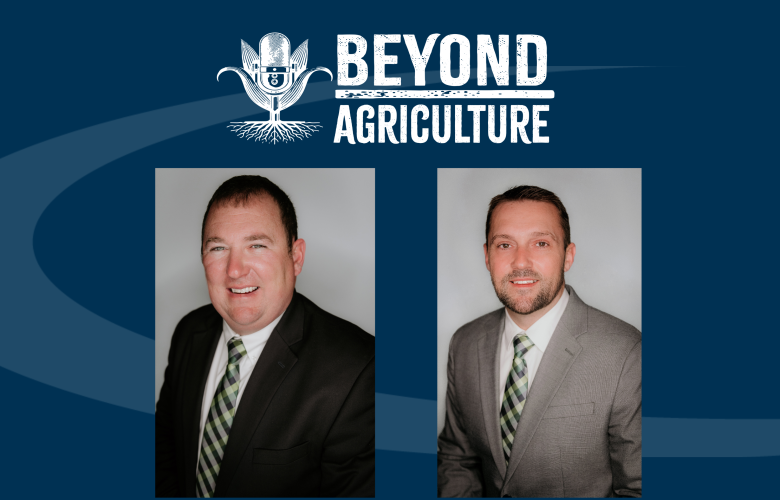
In Part 2, we join Ag Credit President and CEO Jonathan Noe and Vice President and CLO Richard Medley to continue our discussion by diving into working capital. We will break down what working capital really means for a farm operation, why it's essential during uncertain market conditions, and practical ways farmers can strengthen liquidity without limiting growth.
- View Transcript
[00:00:01.220] - Intro
Welcome to Beyond Agriculture, the podcast that takes you beyond the scope of ag and into the real-life stories, conversations, and events taking place in our community. Who we are and what we do is beyond agriculture.
[00:00:21.570] - Cassie Johnson
Welcome back to Beyond Agriculture. In part 1 of this conversation, we discussed the importance of strong business acumen from decision-making and cost control to the mindset shift needed when it comes to equipment and capital spending. In this episode, we're continuing the discussion by diving into working capital. We'll break down what working capital really means for a farm operation, why it's essential during uncertain market conditions, and practical ways producers can strengthen liquidity without limiting growth. Let's pick up the conversation. So we're going to switch gears a little bit and we're going to talk a little bit about capital, kind of understanding and managing liquidity. So in simple terms, Jonathan, how do you define working capital for a farm operation?
[00:01:09.120] - Jonathan Noe
I would define working capital as an asset that can be quickly turned into cash. It can be cash, it can be in the form of crops ready for sale, cattle in the field.
[00:01:24.830] - Cassie Johnson
Yep.
[00:01:25.090] - Jonathan Noe
Ready for sale, ready to be marketed, things like that that can quickly be converted to cash. And it's also assets that aren't, you know, balanced by necessarily a liability so that cash can be used. And it's, it's so important for farming operations in today's time. There's a lot of volatility. You know, markets are up and down. We see it all the time. And having that working capital helps you get through tough years. You know, if cash flow— Richard mentioned cash flow just a second ago— when cash flow may be weak one year, if you've got working capital, it can kind of fill in the gaps as you go throughout the year to help you through. But it also allows you to take advantage of opportunities when they pop up. And, you know, as a farmer, you never know when the next farm is going to come up for sale that could help your operation or come up for rent. The next piece of equipment or expansion opportunity comes up and you got to be prepared. And that working capital puts you in a place where you can, can step in there, take advantage of it.Hopefully you have a good lender behind you that can help you with those opportunities too. But there's nothing like having your own working capital. And, you know, we even talk about it here at Ag Credit with our stockholders. You know, our capital is so important and it's for those same two reasons. It's to help you through tough times. We operate in a cyclical business. Agriculture is up and down, get you through the tough times, but also take advantage of opportunities for growth and expansion when they come up.
[00:03:01.510] - Richard Medley
Yeah, I agree with Jonathan. And, you know, for those who know me, you know, boating is a big part of my life. It's one of the things I love to do in my spare time, which I don't have a lot because I'm also a farmer and a lender, but I like to think of working capital as simply as your lifeboat. It's a lifeboat of your operation that you can rely on when something, like Jonathan said, doesn't go right. You still got the ability to get through the storm and come out and be, be still in business tomorrow. And so that's just an easy way. I try to tell young groups when I talk to them that think of it as your lifeboat. You need to have that just because, you know, it's great when things always go right. But, you know, as a farmer, things always don't go right. Because the other night I was out changing a flat tire at 10 o'clock at night in one of those snowstorms, and I wasn't intending on doing that. I would have rather been home eating a warm dinner from my lovely wife. So, but things don't go right, so you need to be prepared.
[00:04:02.450] - Cassie Johnson
Yep, yep, that's right. What are some ways, if there's farmers out there that they don't, they don't have the working capital. What, what can they do to build that up over time?
[00:04:12.080] - Jonathan Noe
Well, you know, I would say it takes discipline. It takes discipline as a producer. You know, in the good years, you really have to take advantage of it. You know, build up that nest egg, you know, strengthen that lifeboat, as Richard says. And there's no other way to put it but being disciplined in good years, save back. Even if you're tempted to make a purchase on some new equipment or, you know, maybe buy something for your family or, you know, personal, you really have to build that working capital up. And so in the good years, hold it back. And that way, when the tough years come along, it's there. And it just takes that kind of discipline.
[00:04:53.950] - Cassie Johnson
How do farmers usually— how do they balance holding too much cash versus, you know, deploying it effectively?
[00:05:01.330] - Jonathan Noe
I've had, as a lender, had a lot of discussions with farmers about this very thing. And there's not always a right answer. A lot of times I think it fits the producer and what's the farmer, what makes them comfortable. You know, because there is a place where you could hold too much capital back, especially if you have some debts to pay and you're paying interest on those debts, or if, you know, maybe equipment purchases have been deferred and it's time to upgrade the equipment line or some capital improvements, that sort of thing. So there is a line there. I would suggest having a trusted advisor that you can work through those things on, whether it's your loan officer, a spouse, you know, accountant, CPA that you work with, somebody that you can trust because there is a line there. And every situation is different, but I think that's a place where you need a trusted advisor to kind of work through those situations.
[00:06:04.260] - Cassie Johnson
Absolutely. So another thing that we talked about last night at Annie's was good debt and bad debt. And when you think of the word debt, you just kind of have that, ugh, bad feeling to it because it's debt. And we had some people last night that actually kind of had their eyes opened and they didn't realize that some of their debt's actually considered good debt. Richard, how do you distinguish what good debt— between good debt and what, uh, that builds assets and the bad debt that can cover the losses?
[00:06:36.150] - Richard Medley
Well, uh, like I said, you always ask me the loaded questions.
[00:06:39.530] - Cassie Johnson
Well, I'm just testing you today.
[00:06:40.990] - Richard Medley
It's okay, I can handle it.
[00:06:42.870] - Jonathan Noe
She knows you can handle it, Richard.
[00:06:44.330] - Richard Medley
Uh, but no, the first question is, uh, any— to any debt, and this, this is how I would say, is you got to ask yourself, do you need the debt at first. Like if you're, you know, distinguishing whether you're going to buy something, either pay for it or finance it, you need to make sure that the item you're buying that you need for your operation. So I would say the first step is determine that that's the first sniff test. It's like, do I need this? And then you go into it. Do I buy? Do I borrow money? Look at those examples. But, you know, good debts are always, you know, a lot of things And equipment— don't— I hope equipment dealers don't think I'm picking on them here. But, you know, usually a long-term farm purchase is, you know, the debt associated with the farm purchase is not a debt that would get somebody in trouble. It's something that you've got an asset, you know, it's a— it's an asset that you're going to have a long time. It should appreciate in value, but it's also allowing you to run your operation. So if I'm categorizing debt as good and bad, that would be a good debt in my book.That, you know, it's something that's long-term, you know, you can pay ahead if you want, but it's the payments are set up to where hopefully your operation— now with land prices today, I'm not sure that it will cash flow on its own, but, you know, theoretically it should. But even though Dr., our good friend Dr. Isaacs, said, you know, what was it, that a farm cannot, will not, should not ever pay for itself.
[00:08:16.930] - Cassie Johnson
Yeah.
[00:08:17.720] - Richard Medley
You know, that's, that's a good thing. If you ever see him, you should ask him about that. That little lesson he puts together, it's really interesting.
[00:08:23.510] - Cassie Johnson
It's a really good one.
[00:08:24.310] - Richard Medley
Yeah, it is. It's a very interesting perspective. But when you get into talking about bad debt, it's hard to say something is terribly bad, but if you're buying something that your operation doesn't need or your cash flow barely handles it, that's when I would say that's a bad debt. You need to make sure that you can— you're not putting your operation in jeopardy. And something that comes to mind, you know, in talking about this is, you know, we're right here at the cusp and, you know, 15, 20 days, it's tax day, everybody's favorite day, April 15th. And farmers do not like to pay tax.
[00:09:04.810] - Cassie Johnson
No, they don't.
[00:09:05.690] - Richard Medley
And they will do what it takes. And that's okay. It's everybody's prerogative. But sometimes it would be simpler to just pay your tax rather than go out and finance a $100,000 tractor and that don't even get you much anymore. But all of a sudden you save tax that year, but now you've got a payment for the next 5. Well, I'm not sure that's a good debt for the operation and I'm not picking on equipment dealers. But, you know, do you know, maybe the best decision if they looked at it objectively, like I said, and, and didn't think about paying Uncle Sam, you know, divorce the name at the top from the situation and You know, what's better for your operation, to pay a little bit of tax or have a long-term payment here that puts your operation at risk? So that's kind of what I would say. And Jonathan may want to allude.
[00:09:59.040] - Jonathan Noe
I would second that, Richard. The one sure bet to that question, if it puts your financials or your operation at risk, it's a bad debt. And I think producers should take the same approach that a lender would take. When you start looking at a purchase that involves a debt and you look at what that payment's going to be and how it's going to impact your cash flow and your operation, stress that a little bit and say, hey, what if cattle prices are this? Or what if grain prices are this? Can I still make this payment?
[00:10:38.670] - Cassie Johnson
Right.
[00:10:39.330] - Jonathan Noe
Because that's the reality. You know, Richard mentioned equipment over 5 years. Land maybe over 20 years, you know, and so you have to prepare for the tough year too and say to yourself, even in a tough, tough year, can I still make this payment? And if you can't say that, that you certainly can, it's probably a bad debt.
[00:11:01.670] - Cassie Johnson
So a lot of farmers, they always want to be, you know, that, that big sunshine at the end and where it says debt-free. Why is that not always the best strategy to just instantly, you know, that's your one goal is to be debt-free?
[00:11:16.620] - Richard Medley
Well, you know, I guess a lot of people, it would be a euphoria situation if you got to that. Yep. But you also have to look at it as a business decision. Was that the wisest use of your capital to just pay off debt at the expense of not growing your operation? And what did it take to get there? You know, there's a lot of backstory that says, You know, being in debt is not a bad thing if it's the right kind of debt and it allows you to accomplish your goals. And you just got to be careful. You know, being debt-free would be great, but if it's really hindering your ability to, to, to earn and expand your operation, you need to think about that.
[00:11:58.910] - Cassie Johnson
So here's a scenario. If a farmer is struggling with short-term cash flow, but has strong long-term assets, how should they approach debt?
[00:12:09.220] - Richard Medley
Well, I'll take that one, Jonathan. I've seen, we've seen some of this and it's no secret that in the last several years we've had some of the farm economy, some of the sectors have had some tough sledding years. I mean, we've had two major droughts here in Central Kentucky that's impacted our grain producers and You know, before that, 8, 7, 8 years ago, 10, I know for sure because I'll never forget 2015. You know, we had some cattle producers, you know, that lost some money. And part of ag is it, like we said earlier, it ain't always going to go right. There's always— there's going to be an issue. So, you know, you got to be prepared for the worst. But, but when that happens is whenever you really need to look, you know, and I'm not putting a plug in for us, but when times get tough, your lender really makes a difference. And somebody that wants to, you know, bring you in and really listen and know your operation and really find solutions. And, you know, with, with the appreciation in land that we've seen here in central Kentucky in the last 5 years especially, you know, there's a lot of solutions that can be explored to be able to get through some of the tough times that people have had.And, you know, some people get ashamed and really don't want to talk about it. But, you know, reality is it happens. And, and when that happens, people are usually not alone. It's usually, you know, you can bet that if, if your corn over here was at 75 bushels this year, that your neighbor across the street probably wasn't at 200.
[00:13:49.050] - Cassie Johnson
Right.
[00:13:49.390] - Richard Medley
So, you know, things happen. You don't be ashamed, but talk to your lender and just really look for solutions. And, you know, those can be a variety of things. There's all kinds of tools in our toolbox that we can utilize, partnerships with other lenders, with FSA, but really using their assets to structure something like that that meets their operation. That's important. Using an asset base is great to have. You know, it's really your backbone to help you out when times get tough.
[00:14:21.800] - Cassie Johnson
And I will put the plug in for Ag Credit because we do have a lot of loan officers that are part-time farmers. They probably have experienced a lot of what you have gone through or someone else in the office has too. And I have personally seen where our loan officers care. They care about their customers. They want their customers to be successful. And they're there to help them through the good times and the bad times to make sure that they're able to, you know, continue farming even when times are down.
[00:14:54.960] - Jonathan Noe
Yeah, I appreciate you saying that, Cassie, because part of being a cooperative is adding value to our customers. And it's not always in the form of patronage or money. A lot of times it's in the form of a trusted lender who is familiar with your operation and what you're going through that can help you through these very same issues that Richard just mentioned. And, you know, not only cares but has the knowledge and the experience to be able to help. And that's adding value. And it is important, you know, when you choose a lender, you know, that you've got one that understands and cares.
[00:15:35.200] - Cassie Johnson
Right.
[00:15:35.790] - Richard Medley
Yeah, that makes a difference. You know, Loaning money in good times is easy. I mean, yeah, it's no problem to do then. But, you know, you find out, you find out your lender and everybody when things don't go right. And so it's, you know, if it was easy, everybody'd do it.
[00:15:50.490] - Cassie Johnson
So speaking of industry expertise, we're going to switch gears and talk a little bit about the importance of networking and leadership. Why do you guys think it's important for farmers to be involved in industry organizations or local ag groups such as the county cattlemen's or the farm bureaus?
[00:16:08.850] - Jonathan Noe
Well, I would say it's, it's important for several reasons. One being you learn a lot when you are around other producers. You know, agriculture is no different than any other industry. We're experiencing a lot of technological advances, changes in markets, and we're all going through it together. We're learning together. And when you have several people experiencing these things at the same time, if we share with each other, share experiences, you know, we're all going to grow and learn faster. And that's just being willing to communicate and collaborate. And so I think that that's probably the main reason. But it's also good to get together because when you do that, you tend to share one voice. And, you know, there's strength in numbers in agriculture. You know, we need as many folks out there, you know, promoting agriculture as possible. And when we're together, working together, we're promoting together, and it just strengthens the whole industry.
[00:17:10.960] - Cassie Johnson
And it helps to encourage those who are involved in the conversation to continue to learn. What separates farmers who have that, you know, want to continue to grow and learn versus those who maybe kind of hit that plateau and, and don't try to educate themselves as well?
[00:17:31.730] - Jonathan Noe
Yeah, it makes a big difference. And it comes back to the changes, the changes that we're going through. And you just have to stay out in front of them as technology becomes more and more a part of agriculture. What it does, unfortunately, it starts to shrink margins and profitability gets tougher and tougher because You know, innovation drives lower cost, lower cost to the consumer. And so you— we have to stay up to speed, you know, as, as producers, you know, and really fight to, to make that margin, to produce at less cost and staying on top of innovation, you know, kind of on the cutting edge of things is important because, you know, it just doesn't get easier.
[00:18:17.540] - Cassie Johnson
Right.
[00:18:17.950] - Jonathan Noe
And so I think that's why it's important to, you know, stay, stay atop any innovation, any opportunity that you can get to cut cost, increase efficiency, increase profitability, because at the end of the day, it's going to be those folks that keep them going that are going to be here in the future.
[00:18:38.340] - Richard Medley
Well, that's exactly right, Jonathan. And, you know, I don't think in many industries whatsoever you know, farming, you know, what we do, you know, we're not sitting here today doing the same things we were 10 years ago, 20 years ago. You know, the concepts are the same, but you have to look at different ways of doing it to meet the market. And you just have to look at that even as a farmer. You know, you have to have a willingness to be a lifelong learner and you need to look at every opportunity you have to learn something. That might just be a little nugget, but when you take enough of those little nuggets, it's kind of like, what is it, drops fill the bucket. You have to look at it that way, that everything you take from everything you do daily, you put that together to make decisions and change ways. And like I said, the concepts may be the same, but the way to go about it in today's time might be different. You know, these, these peer groups, and I've talked to a lot of our producers and, and one in particular, a large grain operation. I've talked to them. They're heavily involved in peer groups. And one thing they've told me a lot about being involved in them, and one thing that kind of struck me is they're a very sharing group. When you get to groups of peers and a lot of times people, especially farmers, and I'm a farmer myself, and Cassie, I know you are too. And we can— we can be hardheaded, to say it lightly. And we don't like to share everything. Yeah, but in this particular group, you know, that's the idea. They get together to share, you know, their production, their, their management styles, their different things, and and it's really not meant for criticism. It's meant for challenging somebody to, is there a way you can do it better? Because there's 3 of us sitting here in the room today and we may, you know, it's no different than going to Kroger across town. We may all set out to go to Kroger over on Tate's Creek on the other side of town. We may take 3 different routes to get there. And maybe when we get there, we, whoever gets there first ought to give the other ones tips.Now, things happen, but you have to look at it that way. And that's what this peer group does. They challenge each other and really look at trying with the idea of improving the group. Anytime you can learn from somebody else's mistake or somebody else's new thing that they're trying, you just have to look at it that way. And they're just so invaluable, especially in today's— like we said, margins are tight. You've got to look at ways to do things. And just have it— have an open mind to do things different if there's a better way.
[00:21:29.410] - Cassie Johnson
Well, and not only are margins tight, but the number of farmers are slowly decreasing. And we don't have— we have the internet and we have all of that information on the World Wide Web, but there still is no better information than talking to your neighbor, seeing what they got going on, seeing how things are working for them. And learning from each other because we're the ones with our feet on the ground doing the work, having the experiences, and we can share with them what we've been— what, you know, just to try to make each other better. You know, there's a ton of educational opportunities as far as the learning. There's always extension meetings. I think, you know, I never knew there could be so many extension meetings until I moved to Kentucky because we did not have this many in Iowa.
[00:22:18.680] - Richard Medley
Yeah, they do. And you know, you also— we're in the heart of extension meeting, the timeframe right now. Yes, they're hot and heavy on the trails.
[00:22:27.790] - Cassie Johnson
Yes, they are. So there's extension meetings for the young beginning farmer. We have our Ag Biz Basics. We have an online training that people can do to help them learn more about how to manage their finances. We also— there's tons of sessions. We have some ourselves. We have the Cultivate program. We have Annie's project. Um, so there's always opportunities for people to get involved in groups where they can join their peers, learn from each other, and continue that learning process. So as far as future skills, because we've talked a little bit about the future, what skills or knowledge areas, uh, do you guys think will be essential in agriculture in the next 5 to 10 years?
[00:23:13.020] - Jonathan Noe
Well, we've talked a little bit about it, but technology and innovation is going to— it's technology is moving at an extremely rapid pace. Agriculture is no different, whether it's the equipment we use, the mechanization, the use of computer and GPS technology. All of those things are going to be very important in the future. And understanding those and being able to apply those to your operations to increase production and profit— profitability are going to be very important into the future.
[00:23:45.460] - Cassie Johnson
I agree. I, uh, if you guys go back and you listen to the episode before this one where Lynn Harrell from South Dakota was on, um, he talked about just imagine someday there might be a bumper hitch trailer loaded with drones that you pull out to your field, pull the gate down on the trailer, turn the drones on, and they go out and they put the seed in the ground, they put the fertilizer with it, or whatever the chemicals may need to be. And then those drones load themselves back up into that trailer and you just planted a whole field.
[00:24:17.890] - Jonathan Noe
And theoretically you could do it from your living room.
[00:24:20.390] - Richard Medley
Yeah, exactly. From an iPad.
[00:24:22.480] - Cassie Johnson
Yeah.
[00:24:22.800] - Richard Medley
I mean, it's, it's crazy, but I mean, we're not too far from that.
[00:24:27.110] - Cassie Johnson
I don't think so either.
[00:24:28.160] - Richard Medley
I think about the technology changes we've had in the last 10 years.
[00:24:32.020] - Cassie Johnson
Right. I mean, right.
[00:24:33.690] - Richard Medley
Yeah, it's really changing.
[00:24:35.390] - Cassie Johnson
If a farmer could pick only one trait to strengthen first out of all of the traits that we've talked about today? Which one would each of you recommend and why?
[00:24:45.570] - Richard Medley
Well, I'll start with this one, Jonathan. And this brings me back, it's hard to pick only one, but it brings me back to my college days. Now we're going back almost 20 years here.
[00:24:57.230] - Cassie Johnson
Shh, don't say that.
[00:24:58.720] - Richard Medley
But it does really, luckily you're—
[00:25:00.440] - Jonathan Noe
You're getting old.
[00:25:01.560] - Richard Medley
It's a little longer for you than me, but. Anyway, this, this reminds me of a plant and soil science class that I had, of all things. And, you know, one of my majors was plant and soil science because I didn't know what I wanted to do when I was in college. And but anyway, ended up— I'll never forget this. It's called the theory of— it's called Liebig's Law of the Minimum. And so if you think about this, think about a whiskey barrel. We're in whiskey country. So you think about a whiskey barrel that has different stave sizes in it. So you draw a line around it, but every stave is a different size. So the theory says, and this goes back to plant growth, but you can apply it to anything, that your potential of that crop goes to not the— it doesn't go by the most resources you have available, but it actually goes by the minimum. Because if you think about filling up a whiskey barrel, you know, if, if, if you have— let's say you have 10 bung holes up and down through it and the third one from the bottom is out, you're not going to get any whiskey up to the sixth one.Yeah. So you can have all that skill you have. And if you want to expand that skill, that's great. But what's holding you back is the number 3. So the way I'm going to answer that question is kind of put that theory to practice. You know, if, if your production skills are holding you back, like, work on one of them. If it's management, if it's farm records. And I'll have to say this from 20 years in lending, you know, farm records tend to be the thing our producers don't like to do because it's not near as fun to sit at the computer than drive a cool tractor. Yeah, but if that's your limiting factor, if that's your low rung that your barrel is spilling, that's where you need to focus. And so that's how I would really answer that question is you need to take a self-assessment and what do I really need to work on? Because everybody's answer is going to be different. And that's how you'll really grow because every time you can plug one of those holes, you go to the next one and the next one's a different skill. And so that's how I would approach that question.
[00:27:15.130] - Richard Medley
And, you know, there's not one just to pick, right?
[00:27:18.490] - Jonathan Noe
Yeah, that's a great analogy there, Richard. And I agree, you know, it's, you know, working on your weaknesses. And, you know, if I had some advice, this is a lot based on my lending experience, and I saw this so often, and I would say the number one weakness is handling financing. You know, most producers out here, the ones that I dealt with and that we see, do a good job producing, do a pretty good job producing livestock and crops, you know, running the operation. But, you know, you can generate all kinds of profits on a farm and not handle your money well. And at the end of the day, you can go broke.
[00:28:02.780] - Cassie Johnson
Yep.
[00:28:03.740] - Jonathan Noe
And so you have to manage finances. And it's not always the finances of the operation. Sometimes it's personal finances. In fact, A lot of times it's personal finance, right? And the diff— the difficulty for a farmer is they don't get a biweekly paycheck.
[00:28:22.190] - Richard Medley
Yeah.
[00:28:22.890] - Jonathan Noe
Which helps them to manage that money. It's seasonal, sometimes once a year, and some years are good and some years are not. It takes a ton of discipline. So it's not a knock on farmers. It's difficult for farmers. They have some additional challenges to manage financing. But that's where it's at. We got a lot of good producers out there, but whether it's— if it's record keeping, you know, do that record keeping, but really focus on your financial management because it's a challenge for farmers by nature, the way the business is. And I think that's, that's an area that I would say we're pretty good at production. If we can do, do well at the financing, we'll have more successful farmers.
[00:29:09.220] - Cassie Johnson
That's really good advice. And, uh, it's a great way to wrap this up today. I really appreciate having both of you on, and I know you guys are really busy, so it does mean a lot for you to— to me— for you to take some time and do this. But, um, that wraps up today's deep dive into the 5 traits of successful farmers. We covered a lot, from business acumen and working capital to smart debt industry involvement, and continuous education. These traits aren't about perfection, they're about progress. Each one gives you a lever you can pull to strengthen your operation and your future. Take a moment to reflect. Which of these traits are already your strengths? Which ones could you lean into a little more? Small shifts compound over time, and that's where real growth happens. If today's episode gave you something to think about, we'd love for you to subscribe to the podcast. Share it with a friend, and join the conversation on our social channels. Your experiences, questions, and insights are what fuel this community. Thanks for listening to Beyond Agriculture. Until next time, stay curious, stay resilient, and keep building the future of your farm.
[00:30:22.610] - Intro
This episode of Beyond Agriculture is brought to you by Central Kentucky Ag Credit. Thanks for listening to the podcast, be sure to visit agcreditonline.com/beyondagriculture, access the show notes, and discover our fantastic bonus content. Also, don't forget to hit the subscribe button so you can join us next time for Beyond Agriculture.