Episode 44: 5 Traits of a Successful Farmer Part 1
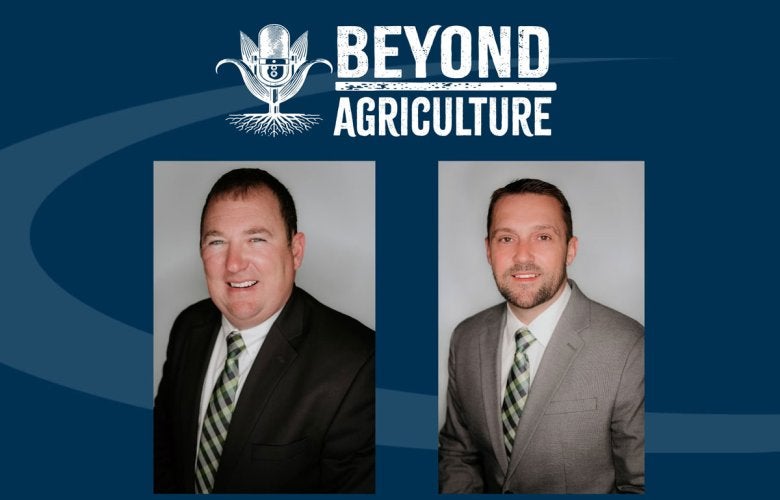
This episode dives into a question every producer, big or small, has asked at some point: What really makes a farmer successful? In a world where margins are tighter, markets are more volatile, and technology is changing faster than ever, the traits that set top producers apart aren't just nice to have—they're essential. We're going to break down the 5 key traits we consistently see in high-performing farms across the country. These aren't hypothetical ideas or academic theories. They're real, practical characteristics that show up in operations that thrive through uncertainty, grow with intention, and build long-term resilience. From strong business skills to smart financial management, industry leadership, and a commitment to lifelong learning, today's conversation will help you look at your own business through a sharper lens. Whether you're a first-generation farmer or carrying on a multi-generational legacy, these traits can shape your trajectory.
- View Transcript
Cassie Johnson (00:00)
Today's episode dives into a question every producer, big or small, has asked at some point: What really makes a farmer successful? In a world where margins are tighter, markets are more volatile, and technology is changing faster than ever, the traits that set top producers apart aren't just nice to have—they're essential. We're going to break down the 5 key traits we consistently see in high-performing farms across the country. These aren't hypothetical ideas or academic theories. They're real, practical characteristics that show up in operations that thrive through uncertainty, grow with intention, and build long-term resilience. From strong business skills to smart financial management, industry leadership, and a commitment to lifelong learning, today's conversation will help you look at your own business through a sharper lens. Whether you're a first-generation farmer or carrying on a multi-generational legacy, these traits can shape your trajectory. So settle in, grab a cup of coffee, and let's explore what it takes to succeed in agriculture today.
Intro (01:09)
Welcome to Beyond Agriculture, the podcast that takes you beyond the scope of ag and into the real-life stories, conversations, and events taking place in our community. Who we are and what we do is Beyond Agriculture.
Cassie Johnson (01:30)
Welcome to Beyond Agriculture, the podcast where we explore the business, the mindset, and the people shaping the future of farming. I'm your host, Cassie Johnson, and today I'm excited to be joined by our President and CEO, Jonathan Noe, as well as our Vice President and CLO, Richard Medley. Thank you both for taking time to be here. I know you both are extremely busy.
Jonathan Noe (01:51)
We're glad to be here, Cassie. We really enjoy the podcast. It's been great for us and we want to do our part to contribute.
Cassie Johnson (01:59)
So I appreciate that.
Richard Medley (02:01)
So I will say that, you know, I've been really embarrassed that you haven't invited me back in years. I was worried that I really had way too much of a face for this.
Cassie Johnson (02:12)
You do have a great face for this. And I will say we do get a lot of people that listen when we have both of you on. So we just got to keep you coming back a little bit more often, I guess.
Richard Medley (02:23)
All right, glad to be here.
Cassie Johnson (02:25)
So it's already been a very busy March. Things are going to get even busier now that we head into spring, but we recently wrapped up our annual meetings. They were very successful, and might I add, the steaks were amazing as usual. So Jonathan, can you share a little bit about what took place at the meeting?
Jonathan Noe (02:44)
Sure, Cassie. We had two sectional meetings again this year, one in Harrodsburg, one in Lexington. They were very well attended. I think we had 325 total in attendance for both meetings. We had a successful election again. Joe Myers was reelected to the board. We established our nominating committee for 2027. So all the business was taken care of. The steaks were really good again this year, and we even did that through some pretty tough weather on the first night. Some rain, cold, but all of our grill masters out there, which are our AgCredit staff, did a wonderful job again. So it was a huge success once again this year.
Cassie Johnson (03:28)
Yeah, normally we have the northern offices will cook steaks when we have it down in Harrodsburg, and then the southern offices will cook steaks when we're in Lexington. And I do recall that when the Southern loan officers were cooking in sunshine and warm weather, that the loan officers from up north were pretty upset that they had all that rain and wind. But it did turn out—
Jonathan Noe (03:50)
Northern loan officers drew the short straw this year, and it happens that way. You just never know. Early March, you know what kind of weather we have in Kentucky that time of year. So it's definitely a flip of the coin.
Cassie Johnson (04:03)
I mean, really, with the way it's going, they could have gotten snowed on. True. So it could have been worse. We also have another great event coming up, our Customer Appreciation Day, which is on April 7th. All of our branches will be serving food and handing out the PAT checks, so be sure to mark your calendar and keep an eye on your mailbox for your invitation. We sent the postcards out last week. We are excited to also roll out something new. The customers receiving patronage checks can now choose to have their check deposited directly into their bank account. Yes.
Jonathan Noe (04:37)
And that is something new. And, you know, first of all, I'll talk a little bit about our Customer Appreciation Day. And, you know, it is our chance to give our patronage out to our customers, which is, you know, that's a key to being a part of a cooperative is that we're adding value back to the relationship with our customers. And patronage is one of those areas where we give back. And so we're excited about that. We're giving out another good patronage in 2026 here. But yes, it's also a chance for us to just meet with customers, let them know how much we appreciate them, give them some food, have a little fellowship with them. But we know that dealing with checks, and some of these checks are sizable, some folks, it's a little tougher for them to get in the office and pick those checks up. So we do have an option now. For ACH direct deposit of our patronage into our customers' bank accounts. And that's just a convenience measure to continue adding value to our relationship with them. So be on the lookout for that if you're one of our customers. When you come in the office, you can sign up that day if you like.
Jonathan Noe (05:53)
Yep.
Cassie Johnson (05:55)
And reach out if you are not going to be able to come into the office, reach out to your local branch, talk to the ladies at the front desk, and they'll be able to get you signed up for it as well. Yes. So today's episode dives into a question every producer, big or small, generally has probably asked themselves at one point or another: what really makes a farmer successful? And we have two very knowledgeable, very intelligent guest speakers with us today that are going to help us break this down a little bit more. And we're going to dive into some of Richard's thoughts on a few of these and, and really see you know, what, uh, maybe even give a little bit of perspective to the listeners to make them think a little bit differently about how they're operating their farm. So we're going to go ahead and dive in just off the get-go. We're going to talk about, you know, kind of the business mindset and decision-making. Farmers often say farming is a lifestyle, but how is it equally a business?
Richard Medley (06:55)
Right, well, Cassie, it's really in how you look at it. I mean, You know, in central Kentucky, we're blessed to have very large farmers, very small farms, and everything in between. You know, a lot of people really want to raise their family on a, on a tract of land. You know, they just want to be out in the country and do some of the things that they, you know, have a few cattle, have a garden, just do a lot of things out in the open. We're blessed that our territory allows us to do that. And, you know, I think everybody's definition of success is, is quite different and You know, it just really depended on what you want out of it. Do you want it to be a lifestyle or do you also want it to be a business? Because, you know, I don't know if anybody has seen these record cattle prices week after week, but it doesn't take long for a hobby or small— it's not a good word, but, you know, a small farm to all of a sudden have several thousand dollars in gross sales to where all of a sudden, you know, this is real money.
Richard Medley (07:56)
And so it's just how you manage that and your perspective on it. But everybody seems to have a different approach to it.
Jonathan Noe (08:03)
Yeah, I would, I would say to, you know, just traveling around the state, you know, and getting to see different parts of the state and the types of operations that are out there across the Southeast, which, you know, covers the majority of the AgFirst district where we're affiliated. We're not entirely unique, but we're pretty unique in central Kentucky. And I believe that that's, that's a good question because, you know, there's a lot of part-timers, a lot, a lot of part-time farmers in central Kentucky. And Richard's right, the territory, you know, it allows part-timers to be successful, but they wouldn't be part-timers if they really didn't want that lifestyle and have a love for farming and agriculture and I think we're fortunate that we can support, you know, whether it's, you know, small cattle operations. We have the landscape here to support small-time, part-time operations. And, you know, it makes up a lot of the ag production in central Kentucky. And I tell people, anybody that will listen, you know, if you take the part-timers out of central Kentucky, the production of agriculture goes way, way down. So it's very important to ag in central Kentucky.
Jonathan Noe (09:19)
And I think we're, we're fortunate to be in this territory.
Cassie Johnson (09:23)
So for those that, you know, determine that they're going to have a farm that is a business and not just a lifestyle, when you think about farm profitability, what are the biggest business mistakes you see for those that, that where farming is their business?
Richard Medley (09:41)
Well, I would say that we all have a tendency to want to acquire a lot of assets along the way. And, you know, when you go to the local gas station or Hardee's in the morning, you know, if you can talk about the big tractor you got or something, you know, that's a lot more fun to talk about. It is. Then getting the check and going to the bank. And I'll give an example of this. When I first got out of college, you know, this is going back several years now. But I did my first farming enterprise. I grew tobacco a little bit, but I also did strawberries. And, you know, there was in a small town, Springfield, Kentucky, Washington County, there wasn't many strawberry producers. And, you know, people would make fun of me and call me Mr. Strawberry. And, you know, I took it because people like to give me a hard time, but I can give it back. But I think they gave you the hard time because you were giving them a hard time. Usually, usually I'm not the one instigating. I'll put it that way. Okay. You know, it just really depends.
Richard Medley (10:49)
But I always told people, you know, I don't care. You can laugh all the way, but I'm the one laughing to the bank, right? Like, I care about putting the money in the bank. And, you know, everybody's definition of what they want out of their operation is different. And so it just depends on do you want to try to legitimately look at this as a business or do you want it to say I'm able to have all this stuff? And like I said, people's definitions are different. They might just like having that shed full of equipment and everything out there to look at. I mean, I think it's pretty, but it also costs a lot of dollars in today's time. It does. It does.
Cassie Johnson (11:27)
And, you know— oh, go ahead.
Jonathan Noe (11:28)
Well, I was just going to say there's definitely a balance there. And I think it's interesting what Richard's saying because, and this comes back to the first question when we started talking about part-timers, it is partly for the enjoyment and the lifestyle. And I've talked about this before with people. You can see it with part-timers. They obviously want to make some money. It can't just be an expensive hobby. They want to make some money at what they're doing. But they're also doing it after hours. You know, if you're— certainly if you're a part-timer, you're doing it after hours, on weekends, in your spare time. And you don't want to be out there on old broken-down equipment, right, where you're spending all your time at the shop and trying to get things done. So, you know, having nicer equipment, stuff that's reliable, you know, it's kind of necessary. And I think that's part of the allure. But As Richard said, there's that balance. You have to be careful. It's nice to have that equipment, but can you truly afford it? And does it become burdensome to your operation?
Cassie Johnson (12:38)
Right. My next question is brought up because we actually, we had our Annie's Project meeting last night and one of our speakers, which Annie's Project is a meeting for women in ag, and one of our speakers was talking about making hard decisions. And how sometimes it's easier for the female spouse in the relationship to make those decisions because they can pull a little bit less— pull more emotion out of it and be a little bit more logical. Because sometimes those guys that are on the farm, putting in the time, putting in the effort, and have the blood and sweat in it, you know, they get a little bit more emotionally attached to things. So how would you, what would you advise for, you know, the approach of making a business decision when there is that emotional connection to the farm?
Richard Medley (13:33)
Well, Cassie, I'll have to agree with you 100%. In the almost 20 years that I've been doing lending, I've seen emotion when you're dealing with farmers. You know, they're very passionate about what they do. And it's very emotional when they have to think about, do I need this or that, or do I have to get rid of something? And that really weighs on you. And something that I've taken, it kind of relates to this over the course of what we do in lending, is it's no different than you being my best friend and you wanting a loan, but I know you don't need it. Sometimes you divorce the the person, the name from the situation, which makes you look at it objectively. And, and would you make that same decision if you didn't know the name at the top of it? And so you got to apply that with the same thing on your farm is, you know, if I didn't know that that was, you know, my granddad's farm or my granddad's tractor, would I make the same rational decision that I should sell that because I need to pay something if I'm not using it.
Richard Medley (14:46)
But if it meant nothing to you, you would probably come to that conclusion real easy. So I see exactly what the Annie's group was talking about there, and I've seen that play out firsthand. But something I learned a long time ago is just divorce the name from the situation and relate it that way to really make yourself objectively look at it.
Cassie Johnson (15:07)
Right. Another, you know, part of the business decision making is when you have to start thinking about cost and controlling your costs. So what strategies do you guys feel farmers could take to use control costs without sacrificing productivity?
Jonathan Noe (15:25)
Well, you know, I think sometimes when you start talking about controlling costs, that's immediately where people go, oh gosh, you know, well, that's going to impact my productivity. Because, you know, there's an assumption that you mean maybe cutting back on fertilizer, fertilize use, or something to that effect, or not buying the equipment that I need to be a little bit more productive. But, you know, it's not necessarily the case. A lot of times it's being proactive when you're going through the process of purchasing inputs, uh, to be out on the front end. Because, you know, whether it's selling a product on the market or purchasing inputs on the market, you're, you are taking a little, little risk there because you're bound by the market price at that time. And so we see some producers that are, you know, very good at this, you know, cutting down on input costs by purchasing at the right time. You know, if there's a period, you know, earlier in the season where you can maybe buy some fertilizer or fuel or something at a, at a good price, they'll go ahead and buy in advance, even though they may have to hold it for just a little while, because at that point the market was good to buy.
Jonathan Noe (16:39)
And so it's not, it's not always about, you know, cutting back where production is impacted. Sometimes it's just about buying at the right time. and taking advantage of the market.
Richard Medley (16:53)
And, and I'll piggyback on what Jonathan's saying. I'll agree with him there. It's really just about managing every input, and it's not just a single item or anything, and, and really just managing it to its fullest potential. And, you know, I've been blessed over the last several years, work with some really good producers. You know, a couple, you know, come to mind that, you know, we have a large-scale cattle producer And, you know, labor is one of his biggest inputs. And so what he does is they make sure— and it's a team effort, him and his wife. So I don't think that just saying he, it's just him. But, you know, what they do is they make sure that, you know, they have a certain threshold of cattle they need to have per person. You know, that's managing an input because having labor is expensive. And so you have to have enough of your cattle inventory to spread that over to make that input, you know, make that an efficient process. And, you know, everything you do there impacts the bottom line because if you still have the same amount of labor and less cattle, well, then your cost per cattle or hundred, however you want to look at it, it goes up.
Richard Medley (18:01)
And so you're just literally looking at all aspects of your operation.
Cassie Johnson (18:06)
And one of those aspects would probably be even equipment. So a lot of times producers may view their equipment as an investment. Why is it important to maybe see it more as a cost instead of an investment?
Richard Medley (18:18)
Well, I'll take this one. So, you know, outside of the last few years whenever equipment skyrocketed, usually equipment was a losing proposition. You know, you can look at it as an investment, but it's an investment— is it truly an investment if it's something that goes down in value? Now we had this period of time where certain equipment has actually went up in value, but that's not the norm, you know, over history. But so if you're looking at it very objectively, now it's really cool to drive a nice new tractor, you know, be warm and then cool in the summer, but you have to look at it objectively. So if you do that, it's, you know, you're— you need to look at that as an investment, just like I was talking about the inputs. You know, that's an input And I've been fortunate to work, you know, with some larger grain producers. And I will say, I'll give them credit that they know their equipment is, it's not an investment. It's basically, it's part of doing business. And they break it down by, you know, cost per acre of using a combine, a sprayer. And they break it down that way that the price of it doesn't matter, but they know how long they're gonna use it and what it takes to make that work for them.
Richard Medley (19:35)
So it's not necessarily an investment, it's just a piece of their operation they've got to have. You know, they're not looking to accumulate that to grow their net worth. They're doing it to produce a crop to, you know, to ultimately have profitability. Right.
Cassie Johnson (19:51)
So what, you know, when people decide that they need to get a tractor, what advice can you give them to help them make the decision if they should actually buy or if they should lease?
Richard Medley (20:02)
That's another good question. And it really depends on certain— there's a lot of reasons why you would do one or the other. I've actually personally, I've done both of these things in the course of the last 25 years of farming, but it really just breaks down to what your intention is for the piece. You know, you need to start with the first question is, do you need it? Now, that one's always a tough one because a lot of times it's a 50-50 shot of whether you really need it. But, you know, there's a lot of advantages to owning it. You know, you own it for tax reasons. You're going to buy it if you want to meet an immediate write-off for a tax problem. You can, you know, buy it and depreciate it out over time or immediate in, you know, Section 179. But leasing, you know, if a young producer wanted to, you know, really look at their business from a cash flow perspective, you know, a lot of times leasing is a better option because You don't necessarily own the asset, but you basically are doing it over lease. Your cash flow requirement per year will be about half of owning it.
Richard Medley (21:10)
And sometimes in a startup operation, cash flow is king, you know. So that's a good reason to do it. And other reasons is, you know, if you're buying really expensive equipment, sometimes just leasing it, it helps your balance sheet because when you're doing the lease, you're not owning it, which means you're not carrying a large debt load against it. So also, you know, that helps you maintain balance sheet strength instead of, you know, having a big debt. So there's really just multiple reasons, and you really need to just sit down and talk to yourself first about what is your objective here. You know, how much am I going to use it? Do I need it? And what's my ultimate purpose? And, you know, and really know your numbers to see which decision fits your operation.
Cassie Johnson (21:54)
That wraps up part 1 of this conversation on the traits of a successful farmer. We've covered what it really means to approach farming as a business, making disciplined decisions, managing costs, and viewing equipment through the right financial lens. In part 2, we'll shift the focus to one of the most critical components of long-term success in today's volatile ag economy: working capital. We'll talk about why liquidity matters, how to build it, and how it can help farm operations stay resilient and positioned for opportunity. Be sure to join us for the next episode of Beyond Agriculture.
Outro (22:30)
This episode of Beyond Agriculture is brought to you by Central Kentucky AgCredit. Thanks for listening to the podcast. Be sure to visit agcreditonline.com/beyondagriculture, access the show notes, and discover our fantastic bonus content. Also, don't forget to hit the subscribe button. So you can join us next time for Beyond Agriculture.