Episode 42 More Than Cattle: The Community Behind Kentucky's Beef Industry
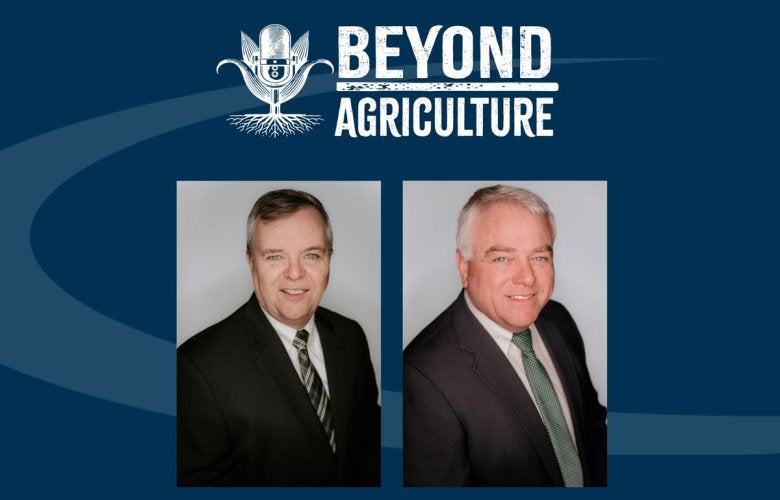
From the pasture to the convention floor, this episode dives into the heart of Kentucky’s cattle community. We explore how the Kentucky Cattlemen’s Association has grown into a powerful voice for producers, the real benefits of being a member, and why connection matters more than ever in agriculture. Plus, we highlight the Kentucky Cattlemen’s Convention—an event where education, advocacy, and community come together to move the industry forward. If you care about the future of Kentucky beef, this is a conversation you won’t want to miss.
Learn more about the Kentucky Cattlemen's Association here.
Learn more about what Central Kentucky Ag Credit does here.
- View Transcript
[00:00:00.000] - Intro
Welcome to Beyond Agriculture, the podcast that takes you beyond the scope of Ag and into the real-life stories, conversations, and events taking place in our community. Who we are and what we do is Beyond Agriculture.
[00:00:17.720] - Cassie Johnson
Welcome back to Beyond Agriculture, where we dig into the people, ideas, and organizations shaping the Future of Rural America. Today, we're joined by Joe Goggin and Chris Cooper for a conversation that hits close to home for every cattle producer in Kentucky. We're taking a deep dive into the Kentucky Cattlemen's Association, what they do, why they matter, and how being an engaged member can strengthen not just your operation, but the entire industry. Whether you run a large herd or just getting started, this is a conversation you won't want to miss. Today, I'm joined by our loan officers, Chris Cooper and Joe Goggin. How are you guys doing today?
[00:01:04.360] - Joe Goggin
Doing great.
[00:01:04.910] - Cassie Johnson
We're finally getting into January, new year, new season, ready to kick off Kentucky Cattlemen's Convention coming up. And that's why today we're here to talk a little bit about the association and really what the Cattlemen's Association is about. So Chris, can you give us a little insight on that?
[00:01:24.340] - Chris Cooper
Well, it's just a statewide organization. For grassroots, it's the best way to represent all the cattle producers. Like you said, even if you own just a few head of cattle all the way up to thousands of head of cattle. And the association does a great job doing that over there. The staff is a really good organization, and they represent the people well.
[00:01:44.180] - Cassie Johnson
Yeah, they really do. Also really focused on a lot of advocacy and education for youth development, which we'll talk a little bit more about. Joe, you have a little bit of experience with the Kentucky Cattlemen's Association. I believe, you worked there a few years ago.
[00:02:00.180] - Joe Goggin
Just a few more than maybe two or three years ago. Actually, 1984, straight out of college. It seems like a lifetime ago. I guess it's 41 years.
[00:02:12.640] - Cassie Johnson
I'm going to tell you, there's not many times I get the opportunity to say that that was before I was born. Yeah. That one was before I was born.
[00:02:19.600] - Joe Goggin
1984.
[00:02:20.380] - Chris Cooper
I was in high school.
[00:02:22.180] - Joe Goggin
Thanks, guys.Way to make me feel young. No, I worked there straight out of college. And really, the cattleman's association in that day was in its infancy. It had just merged two organizations, two cattle organizations, the purebred, the old Kentucky Cattlemen's, and the old Kentucky Feeder Calf Association. It merged into being, at that time, what was called the Kentucky Beef Cattle Association. And literally, when I started, it had 687 members, I think, statewide. Staff included an office secretary/ bookkeeper, and the executive director was Garland Bastin. So I was the third employee. So it was really a small organization. And I spent the first several years just literally blitzing the state, trying to get county organizations formed and organized because we didn't have that many.
[00:03:16.420] - Chris Cooper
And then today, now we're over 11,000 members, and there's probably 30 people on staff, or so, 20 to 30 people on staff over there that are advocating for us each and every day because we need to be back home doing what we do good, where we're good at is raising beef cattle, and they need to be advocating for us on the state and national levels to help us because there's a lot of people out there that don't like what we do. We just can't be out there fighting that front.
[00:03:43.010] - Joe Goggin
It's literally grown into one of the largest state cattle organizations in the country. It's the largest east of the Mississippi.
[00:03:48.660] - Chris Cooper
It is. I believe we finally beat Alabama. I was going to say, back in the- Finally beat Alabama.
[00:03:53.100] - Joe Goggin
In the '80s, '90s, and even early 2000s, Alabama was king, the cattle organizations. East of the Mississippi River.
[00:04:00.780] - Chris Cooper
And that's where Dave Maples come from. That's where, yes, we got him from.
[00:04:05.030] - Joe Goggin
And he learned well under the old executive officers at Alabama. He had a young term down there before college or during college.
[00:04:15.560] - Joe Goggin
It's been amazing over the last 40 years to watch how the Kentucky Cattlemen's has grown and just really become the power that it is, a voice of beef cattle production.
[00:04:28.220] - Chris Cooper
And it is nationally recognized I mean, it really is. I mean, an NCBA, it's top of the list. I mean, they give them a phone call first.
[00:04:36.460] - Cassie Johnson
Now, I forgot to mention Chris, and I apologize, but you actually were a past President of the Kentucky Cattlemen's Association.
[00:04:43.490] - Chris Cooper
In 2021, yes ma'am.
[00:04:44.500] - Cassie Johnson
2021. So you have some experience from behind the scenes as well, like Joe, of what takes place and what they all are involved in. So can you tell me, from an education and resource standpoint, maybe some of the workshops or field days that the Kentucky cattlemen partake in?
[00:05:03.420] - Chris Cooper
Well, I think one of the biggest things that me and Joe was talking about this is the leadership program that we've got over there, and it is just an amazing thing. It's a two-year program, and they usually take about 20, 25 people through it. It teaches everything from dining etiquette to meeting your state and national legislatures and actually going into their offices and actually meeting them and see what our staff does at a state and national level every day for us. Then I think that's probably one of the biggest assets we've got over there as far as that leadership program. And then as far as education, we got the Kentucky Junior Cattlemen's and stuff with Braden Burke, and he's doing an outstanding job with that youth program. Yeah, he is. And so that's just a great program there. And he's just taking it above and beyond what we probably ever even really imagined. So as far as that goes, as far as education and advocacy and workshops and field days and fall classic and just all sorts of things there.
[00:06:04.340] - Joe Goggin
And then through the Kentucky Beef Network, we have the Eden Shale farm.
[00:06:07.480] - Chris Cooper
Yes, Eden Shale.
[00:06:08.600] - Joe Goggin
And all of the demonstrations and the programs that they're doing there. If I can, let me go back in time once again on the leadership program. Just an interesting deal how that started. A lot of people are familiar with the Kentucky Ag Leadership Program, what we call KALP.
[00:06:23.740] - Cassie Johnson
KALP.
[00:06:24.180] - Joe Goggin
Now, in its early days, in the early 1980s, that was called the Philip Morris, Leadership Program. My brother was in the second class. Jeff Settles, who was on the Kentucky Cattlemen's Board at the time, a good friend of mine, and I was working at the Cattlemen's, he had completed the first class. I'm sitting here thinking, I see all the benefits of what's going on with this, what we used to call Philip Morris Ag Leadership Program, KALP now. I'm thinking, Man, the beef industry needs something like this. I got with Jeff, and of course, having just completed the program, he was all about, let's see what we can do to start a program for the beef industry. Then talk to Dr. Curtis Abshier, who was at UK at the time and doing a tremendous amount of work with the Cattlemen's Association. He really loved the idea. The three of us got together and wrote the original guidelines about using the county team concept. We came up with this great program, then we didn't have any money. We had the shell of the program until we could finally get some sponsors and get some money. Then in the early '90s, and actually after I had come to Ag Credit, we were able to kick off the first class of the Kentucky Cattlemen's Leadership Program.
[00:07:39.430] - Chris Cooper
Wayne Supply was probably one of the main sponsors there for a long time. Then, of course, they're nonexistent now. But then there are several different sponsors, Alltech and different ones that have stepped up in their place and stuff. Then he mentioned Jeff Settle's name. Unfortunately, he passed away prematurely, and they created a Jeff Settle's Leadership Award for the person in the class to be the chairman of the next class. Oh, wow. So I won that in 2005, and then I was the chairman of the next class, 2007, I believe, somewhere like that. That's really cool. So that was cool to keep his legacy going because of you're all's leadership in developing that, Joe.
[00:08:18.880] - Cassie Johnson
Now, something else that I think the cattlemen are involved in is beef quality assurance. They have some lessons or they have some classes, don't they?
[00:08:27.930] - Joe Goggin
Yes. And that really, again, The whole beef quality assurance nationwide started in the '80s. And we helped with the staff at UK, the animal science staff there and the vet science there, developed a lot of the protocols on the beef quality assurance. We came up with the pamphlets and the chute side posters to put and the whole protocol for quality assurance. In fact, in the late '80s, we came up with the idea at the convention which KCA Convention is always January now. It used to be January or early February back then, but we came up with the... We called it the Cattle Working Rodeo. We had county teams, or you could have a team, I think, of four people. We had veterinarians as the judges. We had some producers, three producers in the area that ran a lot of feeder cattle that volunteered to bring in a chute and some pens and some feeder calves. We literally, at that time, we had the KCA Convention at the Holiday Inn North on Newtown Pike, and we put a tent up in the grass area at the hotel.
[00:09:38.540] - Cassie Johnson
Those were the good days.
[00:09:39.780] - Joe Goggin
They were the good days. We had bleachers there, and it was a timed event. They had to work, I think three or four calves through the chute. The ones who did it with the fewest deductions in the fastest amount of time, won the cattle working rodeo. It was a lot of fun, but it helped at the same time instill a lot this thought process of needing to do things correctly and injection sites, and doing everything as they should be done.
[00:10:08.980] - Cassie Johnson
Now I think that Braden has even incorporated that into the junior one.
[00:10:14.160] - Chris Cooper
Yes, and there's a national contest, I think, with that, and they compete with other states.
[00:10:17.750] - Joe Goggin
There was a group of us, actually, in maybe '90, '91, we flew to Springfield, Missouri, to the Missouri Cattlemen's Convention, because we heard they were doing it as well. We had the bright idea, Hey, maybe we can get some more states to do this, and then we can have a national contest. But we had a lot of fun at Missouri, but we never really got it kicked off with multiple other states and getting NCBA to sign on to have a national contest at that time.
[00:10:47.080] - Cassie Johnson
Well, that's really interesting. Another thing is obviously the convention. There's some education outreach during convention as well. Chris, can you touch point on that?
[00:10:59.180] - Chris Cooper
Well, the biggest thing probably is the Beef Efficiency Conference, and they have nationally and world renowned speakers come in from all over the nation, really, and come in and speak about different things that's going on, current events in the cattle industry, maybe a disease or something like the screw worm has been here on the screen, on the radar recently. Then, of course, there's always that foot and mouth and things like that. There's speakers come in and talk about that. Then there's different, like veterinary's come in and talk about different latest vaccines and stuff like that and everything. But then there's also the Forage Conference. But the best thing I like about conventions, Joe, is the hallway conversations that we have. Yes, exactly. Sharing ideas, visiting with neighbors, visiting with folks we haven't seen all year. I mean, that is just the highlight to me. It's just the networking and the group working there.
[00:11:49.610] - Joe Goggin
You were going through all the different sessions and programs that they have. I was thinking the exact same thing that probably the biggest takeaway from the cattleman's convention is the networking and what you learn in the hallway or having dinner with somebody and just those connections you make and sharing of ideas. It really is. Again, there's another event that has just grown from basically 30 years ago being not much more than a board meeting to what it is with several hundred people attending now.
[00:12:21.890] - Cassie Johnson
And junior events also.
[00:12:23.280] - Chris Cooper
And junior events. Yes, junior events, too. They have that. And they also have a ladies program where they do a craft or something, but they always have something for the ladies as well. And they rotate that from between Owensboro, Kentucky, now and Lexington. And it's going to be in Owensboro this year. And then it's coming back to Lexington for a couple of years. They usually do two years at a time with their contracts and forwarding and stuff like that. And really It's just a great time to get together with different cattle producers and things. But stepping back there just a minute on that KBN, it's over 20 years old now, and that's using the tobacco money.
[00:12:56.740] - Cassie Johnson
And that's the Kentucky Beef Network.
[00:12:58.160] - Chris Cooper
Kentucky Beef Network, yes. And they have facilitators throughout the state that help cattle producers and their boots on the ground to keep people ready for their cattle herds. And they also help in the CPH sales and different things like that. But then it's over 20 years old, and Becky Thompson has been the head of that pretty much since, I guess, Steve. No. Stevenson. John Stevenson. John Stevenson. Yeah, that's going backwards. The Stevenson. I'm always last day first. Yeah, John Stevenson, and I think he was maybe the star of that. But Becky's really taking that a hold. It's over 20 years old now with the tobacco funds using their money for the BQA and BQCA, beef quality care assurance. Then also the Master Cattleman program, where we're getting ready to do that in Madison County here for a regional deal. Again, just going over the basics of cattle genetics and handling, and there's just a whole different. It's going to be like a six or 8 week workshop, I think, or something like that. But that comes from a hallway conversation, from what I understand, according to Charles Miller. That came from a hallway conversation, too.
[00:14:10.320] - Chris Cooper
So it's neat how these ideas and these things can generate from that to evolve into a workshop or a field day or something like that.
[00:14:17.810] - Joe Goggin
You talk about the convention? That's such an important event for Ag Credit, too. It has been for many years. It's an event that we support strongly as a sponsor. We have a booth in the trade show and participate with a lot of our staff, especially when it's held in Lexington. We just have a tremendous amount of staff that take part in that because most of our staff, they farm on the side as well. They're members of the Kentucky Cattlemen's and the local cattlemen's association. So they know the importance of it, and they want to attend. It's just been a tremendous event for us to be able to network with cattlemen in our area to go to the Kentucky Cattlemen's Convention.
[00:14:57.500] - Cassie Johnson
Yeah, it really has. Now, we talked a little bit about the junior activities at the convention, and you'd touch point on Braden and the fall classic and all of the events that he has. One of the topics that we need to touch base on is the scholarship opportunities that the Kentucky cattlemen have to offer.
[00:15:16.790] - Chris Cooper
And they do have several scholarships for that as well. And then I'm not sure how many exactly now they do have, but that's the foundation that sponsors those, Joe. And I can't remember exactly how many they do, but it's probably somewhere in the neighborhood of 10, 15, maybe $20,000 a year. They go out.
[00:15:37.040] - Joe Goggin
In addition to separate scholarships for going to vet school.
[00:15:42.060] - Chris Cooper
Yes, there's a vet school.
[00:15:43.850] - Joe Goggin
And that whole veterinary program
[00:15:45.040] - Cassie Johnson
Now, another thing is the marketing promotion that the Cattlemen's Association will do. The KCA helps not only to just promote Kentucky beef throughout the state, which I do believe we've bought some burgers and maybe grilled quite a few hundred of them at the Madison County Beef Day.
[00:16:03.140] - Chris Cooper
Over 1,200. That's right. Over 1,200. And we get comments from that throughout the whole year. We see people throughout the whole year and they say, Man, I can't wait for that beef day. And that's part of Kentucky Cattlemen's, again, the ideas and stuff that comes from those hallway conversations and different things. But that is taking Kentucky born and bred cattle that is raised here and harvested here. They never left the state. And then they go back into ground beef that has never left the state right here. So it's just a really neat program. And it's through Beef Solutions. And then it's called Kentucky Cattlemen's Ground Beef. It's very branded and a yellow and black thing. It's available at all the Kroger stores in the Cincinnati, Louisville, and even Nashville districts now. So it just really exploded. And they...
[00:16:52.200] - Cassie Johnson
And is that a program that just ranchers around here, farmers around here, can get involved in? Or how do you become a part of that?
[00:17:00.300] - Chris Cooper
Members do that, and they have to register their herd.
[00:17:02.760] - Chris Cooper
And it's a very simple process. You just have to give them ear tag numbers and very limited information. It's not a whole big gamut of things, but it's just a limited information that they have to do. But you do have to register your name and herd and stuff like that. And then they are lined up and they harvest those cattle once a week, and they never harvest an animal until there's a PO from Kroger. So it starts at the marketing end and goes backwards to what we need instead of starting at the... Cattle producers can produce the best cattle ever was and as many as you want. But in order, we got to market them. So it started at the marketing end with Kroger and worked backwards. And so there's never an animal harvested until there's a PO purchase order from Kroger that says, We need this many cattle. So it's about a two to four week pipeline here that they do so.
[00:17:52.360] - Cassie Johnson
So what are some other maybe programs that producers can get involved in that help add a little more value to their cattle?
[00:17:59.780] - Chris Cooper
Well, there's the CPH programs, which is part of the KBN, again, program there where they wean the cattle 45 days. And then there's other programs, too, like the Tim White sale is actually part of KBN, where they get the tags and stuff through Becky and different ones like that. And they help coordinate those sales and things like that as far as getting everything together. But producers that can value add to their calves and wean them and put them through a vaccination protocol and then market them as a group commingled.
[00:18:33.260] - Joe Goggin
I think it's important, too, as you talk about Kentucky Cattlemen's Association, to differentiate people think about the checkoff and beef promotion. Now, that is actually a separate entity, the Kentucky Beef Council. And they're housed under the same umbrella or the same building, same roof. But it is different staff. It's different programs. Membership monies don't go towards the council, and the council checkoff dollars do not go towards membership activities.
[00:19:02.690] - Chris Cooper
As Dave says, there's firewalls. There is a firewall. There's firewalls there, and it is government regulated.
[00:19:07.200] - Joe Goggin
So when you get into a lot of the promotion, beef promotions, that is checkoff dollars and beef council and not membership side. But yet, they do work in unison with each other.
[00:19:19.620] - Chris Cooper
And that money can only be spent on consumer and producer education and research and- And beef promotion. Beat promotion marketing. It cannot be spent on any political advocacy or anything like that. Or lobbying or anything like that. But that's where the firewall comes in, because that money has to be accounted for. And there's very extensive audits that go on about that money to make sure it's spent in the right way. And we talked about that money being spent. When I was over there, Joe, we did a New York initiative or Northeast initiative, where we spent some of those dollars up in the Northeast, where there's a lot of people up there and so you got to get your beef on the table in the restaurants and on the kitchen tables. So we advertised up there and spent some good money. And those people were so efficient with that money. The money they didn't spend, they sent back to us. Oh, wow. But that was a huge push for our Kentucky beef to get to the northeast where all the people are. And so it was cool how that worked out. So I was very, very pleased with that.
[00:20:25.480] - Cassie Johnson
That is really interesting. So, Joe, you worked there for a little a while, and you knew the in and out and the day to day stuff. But we've talked about all these events that they are a part of, and obviously, that takes a lot of work, a lot of footwork for them to get done and to happen. But what are maybe some other day to day things that the Cattlemen's Association works on?
[00:20:47.340] - Joe Goggin
Well, it's a lot of membership initiatives. Of course, Cow Country News comes out. The cattlemen's. They now manage, I think, the publications for several states in Southeast. Maybe not even- I think even Michigan.
[00:21:03.930] - Chris Cooper
Even Michigan and Ohio, I think they do now.
[00:21:06.380] - Joe Goggin
They really are, like we said in the beginning, they're a power when it comes to state organizations because they've grown to the level that their influence and their recognition nationally is really amazing to what they've been able to do. But we've always thought of the Kentucky cattlemen as the voice of the beef cattle industry. We always used to say, If you don't promote your own industry, who's going to do it for you? Nobody's going to do it for you.
[00:21:34.840] - Chris Cooper
Because there's a lot of people out there that don't like what we do.
[00:21:36.720] - Joe Goggin
That's exactly right. There's organizations and there's people out there that would love to put cattle producers out of business. Just be honest about that. And we've got organizations like the Kentucky Cattlemen's Association there to protect us and to help in those fights against outside influences that are negative to the cattle production and beef production.
[00:21:58.340] - Cassie Johnson
And they can probably handle the voice a a lot better than most people can in any debate.
[00:22:03.580] - Chris Cooper
Because they're dedicated to it. Day to day, that's their job.
[00:22:06.430] - Joe Goggin
That's their job. And their strength in numbers. We used to always say, their strength in numbers. And now, like Chris said, when you have 11,000 members, that gets the attention.
[00:22:14.880] - Chris Cooper
Yes, of legislatures and everybody.
[00:22:16.800] - Joe Goggin
When you can go in front of somebody and say, We represent 40 plus thousand producers in the state, and we have 11,000 paid members. That gets the attention.
[00:22:28.280] - Chris Cooper
And you got Nikki and Dave that are lobbyists that go to Frankfort and Washington, and they keep their finger on the pulse of all the different things that are going on. Then taking it to the next level, too Joe, with the National Cattle Beef Association, they do it on a national level, and they from what I understand, well, I've actually seen the room. They've got a room that monitors every media outlet. And anytime the word beef is mentioned or cattle or anything, they're on it. And so they're out there putting the correct message out. And so that's the neat thing about it. They're watching out for us.
[00:23:03.040] - Joe Goggin
They are highly respected lobbying influence in Washington.
[00:23:06.770] - Chris Cooper
Yeah. Ethan and those guys up there in Washington and then even Colin Woodall at the head of the helm up there. So they got a good team. It's a good team.
[00:23:16.900] - Cassie Johnson
So before we wrap it up here, I want to talk a little bit more about the Cattlemen's Convention, because it is coming up. It's coming up next week here. We're going to be setting up a booth at the convention, so you can stop by, speak to you guys will both be there. We'll have a couple of other loan officers there. But other than in the hallway and having the conversations, what do you feel is the most important part about convention?
[00:23:43.340] - Chris Cooper
Well, go ahead, Joe.
[00:23:45.020] - Joe Goggin
No, I was going to say, obviously, we're part of The Trade Show with the Ag Credit, and we want everybody to go into the Trade Show, support those vendors, all of them. But then the educational sessions are just really important. And then hearing the speakers and getting the feedback of what's happening in the industry on a national level to stay informed on that. And there's sessions on markets. It's just a lot of educational opportunities there, in addition to that hallway conversation that everybody enjoys.
[00:24:19.730] - Chris Cooper
And the staff does a really good job of pulling in good speakers on current events and different things that we need to know about. And on the cutting edge, you might say, of what we need to know as cattle producers. I can't remember a single convention that I've gone to in the last 25 years that I haven't took something back home with me, with some form of knowledge or maybe even something that I can take back and implement on the farm as far as health protocol or whatever I can do to make my beef herd better. I think with all beef producers, that's what we want to do, is produce the best beef we possibly can for the consumer at the safest and most economical price.
[00:25:00.000] - Cassie Johnson
That's for sure. Now, if somebody's listening to this and they're like, Man, I think I want to go there next week, but they haven't, do they need to preregister? Can they come? Can they come and listen, become a member there at the convention?
[00:25:14.630] - Joe Goggin
They can register on site.
[00:25:15.480] - Chris Cooper
They can register on site, yes.
[00:25:17.070] - Joe Goggin
It's preferred and it's encouraged to preregister, but you can register on site. You can register just for a day. You can register for the whole convention. Now, if you want tickets to the luncheons or something like that, it really is encouraged to do that in advance because they can get sold out.
[00:25:31.860] - Chris Cooper
They get sold out. I think this year they're changing up the protocol a little bit. They're not doing an evening banquet. They're doing an afternoon or a lunch, and doing all the awards and all the presentations. Dave gives his report there about the cattle association Then Ken Adams gives the financial report. That's where the Hall of Fame is. The Hall of Fame is inducted, and Joe does that and does a good job with that. That's always a good thing, too, to recognize not necessarily all of our seniors, but those that have been in the industry and blaze the trail for us and keep the fire going.
[00:26:04.200] - Cassie Johnson
Well, guys, that was a really great conversation. I mean, you two could have the show all to yourselves. I don't want to have to do a darn thing. I really appreciate both of you coming on today. And that wraps up today's episode of Beyond Agriculture. Again, a huge thank you to Joe Goggin and Chris Cooper for sharing their knowledge and passion for the Kentucky Cattlemen's Association. If there's one takeaway from today, it's that being informed and involved isn't optional anymore. It's part of being a successful producer. The KCA is here to support you, advocate for you, and help you navigate a changing industry. Thanks for listening, and we'll see you next time.
[00:26:43.700] - Outro
This episode of Beyond Agriculture is brought to you by Central Kentucky Ag Credit. Thanks for listening to the podcast. Be sure to visit agcreditonline. Com/beyondagriculture. Access the show notes and discover our fantastic Also, don't forget to hit the subscribe button so you can join us next time for Beyond Agriculture.