Episode 41 YBS- Young, Beginning, Small Farmer Programs
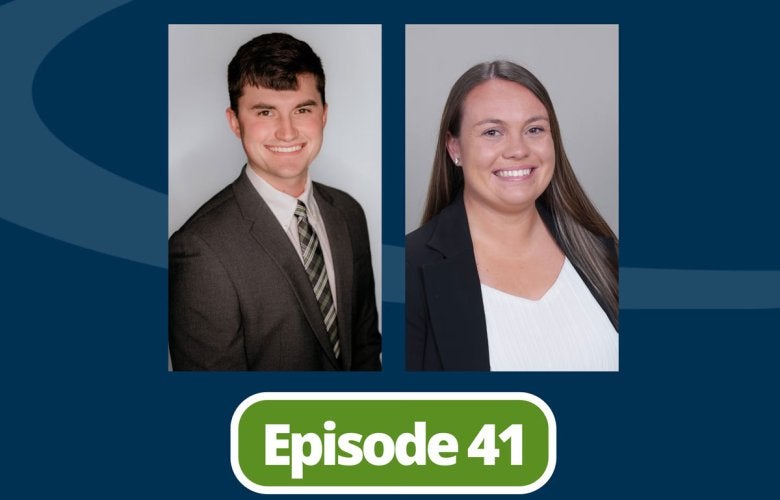
In this episode, Marketing Coordinator Cassie Johnson sits down with Loan Officers Ben VanHook and Olivia Randolph to explore the programs Ag Credit offers to Young, Beginning, and Small producers across Central Kentucky. They dive into resources like AgStart, Cultivate, Annie’s Project, and AgBizInfo.com—each designed to support producers in strengthening their financial knowledge, understanding insurance options, planning farm transitions, caring for their well-being, and much more. Tune in to learn how these programs can help set the next generation of agricultural leaders up for success.
- View Transcript
Intro (00:00)
Welcome to Beyond Agriculture, the podcast that takes you beyond the scope of ag and into the real-life stories, conversations, and events taking place in our community.Who we are and what we do is Beyond Agriculture.
Cassie Johnson (00:17)
Welcome back to Beyond Agriculture, the podcast where we explore the people, programs, and partnerships shaping the future of farming. I'm Cassie Johnson, and our special guests today are loan officer Ben VanHook at a Lexington office, and we also have a loan officer out of our Paris branch, Olivia Randolph. How are you guys doing?
Ben VanHook (00:43)
Good morning. Doing well. We've been busy the last couple of weeks. We just finished up our Ag Credit Christmas party the other day, went down to Harrodsburg.
Cassie Johnson (00:54)
Did you?
Olivia Randolph (00:56)
No, not Harrodsburg. We didn't go to Harrodsburg. We went to Lawrenceburg.
Ben VanHook (00:59)
Lawrenceburg I heard.I was all over the place.
Olivia Randolph (01:01)
Geography is really hard for us. Maybe not my strong son.
Cassie Johnson (01:04)
Did you drive there or did somebody else?
Ben VanHook (01:06)
I did drive there, actually.
Olivia Randolph (01:07)
That's the scary part.
Cassie Johnson (01:10)
But yeah, I heard it was really good. Unfortunately, I had to go to the Estill County Christmas parade for my daughter's softball team, but everybody said they had a blast and said the venue was amazing.
Ben VanHook (01:22)
Yeah, it was pretty well-attended. The meal was great. Plenty of space, played some games. Good for Company culture, get together and share some stories, have some laughs, and just enjoy ourselves.
Cassie Johnson (01:35)
And now we have the cold weather. It's so cold. And it's going to get colder.
Olivia Randolph (01:45)
So this isn't even cold yet. I know. It's going to be really, really cold.
Olivia Randolph (01:48)
And we're from up north originally, and we're saying it's going to be cold.
Ben VanHook (01:52)
So this coming week is going to be bitter with the wind chill. I mean, that's the main thing is we're going to be chilly, but then you factor in 40 mile an hour winds on top of that. And they were talking about negative windchills, which Kentucky can get cold, but that's not typical. Yeah.
Cassie Johnson (02:10)
Well, and Christmas is around the corner. And one of the things that Ag Credit enjoys doing is having the Christmas tree contest with each branch. But more importantly, they have the canned food drive as well. So Olivia, can you tell us a little bit about the canned food drive and what we do with the food?
Olivia Randolph (02:28)
Yes. So each branch is collecting canned food. We love a competition up here at Ag Credit. We are all getting points based on how much food comes in, and then we'll turn that out and donate it to local food banks. They'll give out over Christmas break and the Christmas holiday to different people in need.
Cassie Johnson (02:51)
Be sure if you guys have some canned food that you'd like to donate, get that over to your local branch by December 22nd. So today we're going to dive into a topic that's really close to all of our hearts, that's supporting the young, beginning, and small producers. Central Kentucky Ag Credit has made this a top priority through innovative programs like AgStart, Cultivate, and Annie's Project. Plus, today we'll also talk about how partnerships with the Farm Service Agency and the Kentucky Ag Finance Corporation makes efforts even stronger for us. So let's get started. How about we start talking about why YBS producers matter to us? New farmers face challenges like access to land, financing, and navigating a lot of the complex regulations. They also need education, mentorship to help build a sustainable business, especially if they're a first-time farmer that doesn't have the family support. And that's where Ag Credit steps in. So we make sure that these producers have the tools and the support they need to be able to succeed. So why is supporting the YBS, the young, beginning, and small producers, such a priority for Ag Credit? Yeah.
Ben VanHook (04:14)
It's super important because if you just look at the demographic of farmers, the average age of a farmer is continuing to go up. Farming is such a generational family business. These programs allow us to serve a group of people that's really... I mean, you're starting the foundation of their operation, their careers. These programs allow access, and we'll dive in deeper, the specific terms and products that these help with. But they really help the beginning of that startup operation, whether that's a mentor as a loan officer or mentors in their community, and help to create relationships with folks that are going to help them to continue to grow and begin their operation.
Cassie Johnson (05:05)
Yeah. And really, even just the fact that if we don't have these guys to continue the legacy of the agricultural industry, it makes our job irrelevant, right? And then we also start tending to see the decrease in education in the school systems, the public schools that are more city than rural. Really, everybody depends on agriculture.
Ben VanHook (05:37)
In some way, food, fuel, and fiber. Someone's got to raise it, and the next generation are the people that are stepping up to do that.
Cassie Johnson (05:48)
What trends are you seeing in ag that make these programs so important?
Olivia Randolph (05:54)
I think one of the biggest trends, especially around this area, the Lexington area, just Central Kentucky in general, is just transition of farmland, whether that's from older generation to younger, from family to new purchaser, or a lot of that land is being bought up for development. If we don't encourage young people to stay in agriculture and stay in farming, we're going to see a lot of that go more towards that development side, which, as Cassie just mentioned, that hurts us. We become a relevant with that. That's one of the biggest trends that's talked about. It's talked about by us. It's talked about by extension. It's talked about by Kentucky Farm Bureau. It's a big problem or big concern, I guess we should say. That's not going to go away ever, probably. To have these programs available, and especially us, we're young loan officers. We're young and involved in this anyways, so we care about it. To be able to talk about that with our peers and know there's things that we can help people that maybe can help us, too, I think is really exciting and
Cassie Johnson (07:13)
Well, yeah. We're not just a lender. We're more here to be a partner with them through their process. Our mission is to strengthen rural communities by helping producers thrive. For YBS Farmers, that means creating programs that go beyond the loans and focus more on the education, the flexibility, and the long term success. Ben, can you talk a little bit about the AgStart program that Ag Credit offers?
Ben VanHook (07:41)
Yeah. The AgStart program, what it is, is it's essentially a big umbrella that encompasses a lot of different programs and offerings that both we at Ag Credit do, and also our funding bank, Ag First, offer some other benefits to that as well. But some of those programs that AgStart include is partnerships with the Farm Service Agency, Kentucky Ag Finance, and then also an AgBiz Basics, which is an educational and online-driven platform that allows young beginning small producers to network and learn just business strategy, risk mitigation, and to learn the numbers. At the end of the day, learn numbers behind their operation and where are the holes or the cracks that we need to fill in to be more profitable and be successful.
Cassie Johnson (08:36)
What do you think makes makes AgStart and what we do at Ag Credit different from some of the more traditional financing options?
Ben VanHook (08:44)
At the end of the day, that AgStart program, really, it's all about being an expert in your field. Like you mentioned, that partnership. These partners that we work with alongside your loan officer here at Ag Credit, we really are, and we devote, our scope and direction is in the agricultural field. We know the numbers. We all are involved in ag in some capacity, most of which grew up in the ag field. So that's the main difference than a more conventional direction.
Cassie Johnson (09:21)
So we mentioned a little bit about what the AgStart is, but we also have a lot of programs that go into Ag SAgStart. One of them, the first one being the AgBizInfo, which AgBizInfo is... It's actually not a program, but it is part of our educational outreach. It's a resource hub created by our bank, AgFirst, which in our district, all of the associations that are within our district, they help provide content for the website. So the website offers free tools for answering financial questions. It's got articles, it has videos, podcasts. The podcasts are really good to listen to as well. And then business planning resources to help those producers get a start. So that's one of the options that they have. If they don't want to come be a part of anything, but they want to be able to get some education, as they can always go to the agbizinfo.com. We also have another program that Ben, you've been a part of for a few years now, and Olivia as well, called Cultivate. Can you tell us a little a bit about Cultivate?
Ben VanHook (10:31)
Yeah. So the Cultivate program, it's directed for a certain demographic, young beginning small farmers, of course. There's a process, an application process with some information that we've got out online, which I'm sure we'll link to the podcast potentially for anyone interested to take a look at. But what the mission is of that group is to get young beginning and small farmers in a room. We meet for six weeks. That's once a week in the evening, oftentimes after work hours, so that everybody can attend. And we invite guests. Ag Credit employees will be there, of course, the Cultivate members, and outside professionals in the field to come in and just share knowledge, experiences, even farm field visits to go out and get in the field and see what other folks are doing to be successful in their operation. Really, it's just a great way to network with other individuals that are already doing it or others that want to get started in agriculture and build that network of people to bounce ideas off of. We've seen great success with this program over the years.
Cassie Johnson (11:46)
Yeah. Originally, we did it over a two-year span where we did once a quarter. But this year we're changing it up. We're going to shorten the time period, try to help it so that way people know the exact dates, and we keep it a pretty tight structure. So that's why this year we're going to do once a week for six weeks straight.
Ben VanHook (12:10)
Yeah. And Dr. Steve Isaacs with the University of Kentucky is a great partner with that program. He always attends and brings great value.
Cassie Johnson (12:18)
Now, another program that we have is Annie's Project, which Olivia, you helped out with Annie's Project this last year. Can you tell us a little bit about that?
Olivia Randolph (12:26)
Yes. So Annie's Project is an education program that is focused towards women in agriculture. Same type of set up as Cultivate, six weeks.
Cassie Johnson (12:37)
Was it six or eight? Yes, six weeks.
Olivia Randolph (12:39)
We have different speakers come in and talk about a lot of the same topics, risk management, starting an operation, financials, insurance, things like that. We try to get females in those fields to come talk as well. It's just a safe space for women to come and talk about ag, sometimes it can be hard. And intimidating, yes, to be a female in some of more traditional Ag events and programs that seem to be male dominated. So this is just a place for everybody to let their guard down a little bit and feel really welcome and comfortable. It's really cool to see that. There's a lot of talking. A lot. We talk a lot. So for quieter people, you got to get out of your comfort zone a little bit there. But it's really cool to see how people come out of their shell more when they're a little more comfortable or just... There's different types of questions asked at a thing like Annie's Project than maybe Cultivate or other types of events that go on in the community.
Cassie Johnson (13:49)
Yeah. Really, Cultivate, it's more of a growth-focused program. Those that are coming in are smaller producers or beginning producers that just need a little bit more of that education and just need a little bit more of a push in the direction or to help them find what direction they want to go. Where Annie's Project is more of a, we're either getting started or we've been in this for a while, but maybe we have a partner that's been handling a lot of it and we don't quite understand everything he does or we want to get more involved. We're going to retire from our job in town and we want to be more involved, but we haven't ever handled the books for the farm necessarily. Just two different areas that we cover between the Cultivate and the Annie's projects. But of course, these programs, they're not just about the money. They're about building the confidence and building a community of people to rely on each other. So how about we talk about the partnerships that we have that make it all possible? Obviously, you've already mentioned the FSA. We work closely with FSA so that they can help provide the loan guarantees and support for the beginning farmers.
Cassie Johnson (15:08)
This partnership really helps reduce the risk and expand the access to credit for those that are looking to get the loan. We also collaborate with Kentucky Ag Finance, which Olivia, you have a little bit of experience from Kentucky Ag Finance. You were employed there for how many years? Three. Three years. And then you transitioned over to Ag Credit, which we are so happy to have you here. But can you tell us a little bit about, maybe, Olivia, you talk a little bit about how the FSA and KFC partnership strengthen our ability to serve the YBS producers
Olivia Randolph (15:45)
Yeah. When we make a loan at Ag Credit, we have different underwriting standards and things like that that go on for each loan. We understand that a lot of these young starting out producers, they may not have the capital for every part of their operation, or some of those numbers that we look at just aren't quite there. Not a bad thing. It's just really time. It's the value of time. They haven't had time on their side. When we use programs like FSA and Kentucky Ag Finance Corporation, we're able to do some more unique things with a loan to better set that borrower up for success. A couple of those things you're looking at lower down payments, some lower interest rates, longer loan terms, things like that. We mainly use FSA for loan guarantees, which helps protect Ag Credit from a risk standpoint and the borrower, we also can use them and work with them on some direct loan products that they offer. Then Cassie mentioned the Kentucky Ag Finance Corporation. That's a participation loan program that is offered to anyone in the state of Kentucky by the Kentucky Department of Ag. It's ran out of the Office of Ag Policy.
Olivia Randolph (17:08)
They participate with us on a loan. They can go up to 50% or $250,000 on a project to them, whichever is less, and they have a lower interest rate. It allows a portion of that payment you're making as a young beginning farmer to be more doable for you. It's not as big of an undertaking from an interest standpoint. Those programs, and they can be used together as well. We use both of them simultaneously often. It's very rare. I'd say we do, especially on real estate loans, one without the other. It just strengthens everything.
Ben VanHook (17:47)
When used in conjunction, we can get down payment as low as 5% on a farm purchase.
Cassie Johnson (17:53)
Which typically a payment is usually 20%. Yes. It's a huge decrease. Yeah.
Ben VanHook (18:01)
Then even extended loan terms with the guarantee in Kentucky Ag Finance, mostly FSA, we utilize that and can go up to 30 years. From a repayment standpoint, stretching real estate is highly valuable here in central Kentucky, and these purchases are a lot of money. So just an additional five years on top. Typical in-house loan would be 25 years. Extending that to 30 years just frees up some repayment capacity for that customer.
Cassie Johnson (18:32)
Yeah, that's huge. So while you're on the topic, do you have maybe some examples of how these partnerships have made a difference for a farmer that you know or a customer potentially that you might be able to talk about?
Ben VanHook (18:47)
Yeah. Just this year, we had our Christmas party the other day, and we gave out awards for folks that utilize those programs. I was very tickled with several We have several loan officers that had closed several loans with FSA, especially, and Kentucky Ag Finance. There's strong demand for those products here. Earlier, we were talking about trends. There was quite a few loans closed this year. With those products. It's very important for the next generation.
Cassie Johnson (19:21)
Yeah, for sure. Looking at these customers from a loan officer perspective, what benefits have you seen come out of these YBS programs?
Olivia Randolph (19:37)
Okay, I'll go. I'll talk. I think some of the benefits are there's the financial benefit that we see on a balance sheet, we see on an earnings statement. Ben talked about significantly lower down payment in real estate loans, things like that. There's obviously that financial benefit that we like to see as loan officers. It protects us, helps the borrower. When we get to do both of those things, that's a win for us. But I think it goes past that financially. When you take the time to sit there and say, I have this product for you, and not from a sales standpoint, but I want to help you. I want to see you grow and see you succeed. Here's all these things I can give you and offer you to do that financially and from a mentor and education standpoint, introduce you to peers that are doing the same things. Maybe you guys can bounce ideas off of each other. I think the fact that we have all these things, we can offer people right when they come to the door, we tell them about it and we can offer it to them and have a path of growth for them.
Olivia Randolph (20:48)
I think a lot of people take that to heart. They know we care, and it grows our relationship with the borrower and also helps them.
Cassie Johnson (20:57)
Well, and it's always beneficial when majority of our loan officers either have a farming background or they are still farming with family or they farm part-time on the side when they go home at the end of the day. I think it makes them more relatable and they can... If I came to Ben with a problem, and I've heard Ben do it a million times, it drives me nuts sometimes when I'm on a schedule and I want to get going, but I've heard him talk, and they will go from talking about the loan to talking about how the market is going, if they've sold any cattle. And then all of a sudden, they're talking about how to fix a part on a tractor.
Olivia Randolph (21:38)
Because Ben probably has something broke down.
Cassie Johnson (21:43)
But that's what It's so... Fun is not the right word, but it's so intriguing to see how, not just Ben, but all of our loan officers interact with our young, beginning and small customers because it's a partnership, it's a relationship, and we are here to help them all the way, just like you said, Olivia.
Ben VanHook (22:07)
Yeah, and one thing I want to add to that is just on top of the financial benefit, but also your partnership with your loan officer, but also KAFC, they have a mentor program through that, which is now run through KCard. Those KCard individuals can help you put together a business plan that's valuable to us as a loan officer when looking at your plan in the next five years. And they also help with, these are your input costs for the year. What changes? If fertilizer is high, are my soil tests sufficient to maybe not fertilize as heavily this year to be able to make that margin look a little bit better. They just can provide advice year to year, someone you can call on when in need, and that brings additional value as well.
Cassie Johnson (22:54)
Yeah, absolutely. So if you're a young, beginning or small producer, or you know someone who is, be sure to reach out to Central Kentucky Ag Credit and any of our loan officers at your local branch. If not, you can also visit our website or learn more about... To learn more about Ag Start, Cultivate, or Annie's Project. We'll be having our next Cultivate program will be coming up at the beginning of the year, looking like February is when we're going to try to have it. And Annie's Project will be shortly after that in March. So be sure to look up online or give your local branch a call to get more information about that. And don't forget to share this episode with anyone who's passionate about agriculture. But for now, I think we've done a really good job, except for one little hiccup. But otherwise, we did a really good job. I forgot to mention, we are in our brand new podcast room. We have officially created a podcast room in Lexington, so now we can do videos and put this up on YouTube as well. That's all for today's episode of Beyond Agriculture. We hope that you enjoyed learning how Ag Credit is investing in the future of farming.
Cassie Johnson (24:13)
Be sure to subscribe to the podcast for more stories and insights, and join us next time as we continue exploring the people and programs shaping agriculture.
Outro (24:24)
This episode of Beyond Agriculture is brought to you by Central Kentucky Ag Credit. Thanks for listening to the podcast. Be sure to visit agcreditonline. Com/beyondagriculture. Access the show notes and discover our fantastic bonus content. Also, don't forget to hit the subscribe button so you can join us next time for Beyond Agriculture.